Standard packaging works well when products have predictable sizes, weights and handling requirements. Industrial shipments, however, are often anything but standard.
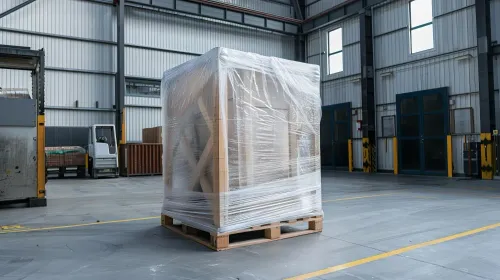
Large machinery, fabricated structures, precision equipment and irregularly shaped components can require packaging designed around the product rather than forcing the product into a fixed packaging format.
For Pune manufacturers, customised packaging becomes especially relevant when the value, dimensions or transportation conditions of the shipment create specialised requirements.
OM INDIA provides customised packaging solutions in Pune for industrial products, equipment and export-oriented shipments.
Signs That You May Need Custom Packaging
Not every shipment requires a custom-built solution. Certain conditions, however, indicate that standard packaging may not be adequate.
Customisation may be worth considering when:
- The product has unusual dimensions
- The equipment is especially heavy
- The centre of gravity is uneven
- Fragile sections extend beyond the main body
- Standard wooden boxes create excessive empty space
- Special forklift or crane access is required
- Multiple components need to be packed together
- Export transportation adds moisture or handling concerns
These factors can influence both the structure and internal arrangement of the packaging.
Customisation Begins with Measurement
Accurate dimensions are essential.
The packaging design should account for the actual product rather than rough estimates. Small measurement errors can create problems when equipment needs to fit within a wooden structure, truck body or shipping container.
Weight should also be verified because it determines the level of support required in the base and surrounding structure.
For machines with uneven weight distribution, additional attention may be needed around load-bearing points.
Internal Protection Should Also Be Customised
Customised packaging is not limited to making a box of a specific size.
The internal arrangement can be designed around the product's vulnerable areas. This might include suitable blocks, braces, cushioning or supports that restrict movement and protect sensitive sections.
Where moisture protection is relevant, appropriate barriers or other measures may also be incorporated.
The final design should reflect the actual transport risks rather than simply the product's dimensions.
Consider Transport Efficiency
Oversized packaging can create unnecessary transport costs and reduce container or vehicle utilisation.
At the same time, packaging that is too compact can place the product at risk if it leaves insufficient room for suitable internal protection.
The objective is to achieve a practical balance between protection, space utilisation and ease of handling.
This is especially important for manufacturers in Pune supplying customers across Maharashtra, India and overseas markets.
When to Discuss Packaging Requirements
Custom packaging is easier to plan before production dispatch deadlines become tight.
Manufacturers should ideally share product drawings, dimensions, weight details and logistics information early enough for the packaging structure to be evaluated properly.
A packaging provider can then consider handling access, material requirements and the expected route.
Customised packaging is most useful when it solves a specific logistics challenge. For industrial businesses in Pune, the right design can help align product protection with loading, transportation and receiving requirements without relying on unnecessary or unsuitable standard packaging.
Keywords