A machinery pallet cannot be designed from weight alone: the footprint, centre of gravity, support points, lifting method, route and destination rules all affect its construction. By the end, you will know how a Pune packaging team turns those details into a load-bearing base, secures irregular equipment, protects it from moisture and corrosion, and releases it for safe handling and dispatch.
Key takeaways
- Provide machine weight, dimensions, lifting points and route details before pallet design.
- Match bearers and runners to the machine’s load path, not a standard pallet size.
- Keep forklift pockets, crane points and tie-down access clear during securing.
- Inspect timber, blocking, markings and moisture protection before dispatch.
Start with a load brief, not a standard pallet size
Before anyone chooses a standard pallet size, provide a load brief describing the machine and its journey. Wooden pallet preparation in Pune starts with this information because a base that survives storage can fail under forklift impact, road vibration or crane lifting.
- Send the packed length, width, height, gross mass and any permitted overhang.
- Mark the machine’s centre of gravity, structural support points, approved lifting points and sling-access zones.
- Show fork-entry direction, required pocket clearance, stacking limits and whether the load will be lifted by forklift, crane or both.
- Identify fragile panels, guards, shafts, wheels, controls and other projections that must not carry pressure or contact timber.
- State the transport mode, route, vehicle or container type, door and axle constraints, lashing locations and any over-dimensional measurements.
- Confirm whether the shipment is domestic or export, its destination country, and whether solid wood, internal blocking and loose dunnage require ISPM 15 treatment and marking.
Engineering pallets in Pune are then designed around the machine’s approved load path, not its outer casing. Include drawings, photographs and the equipment maker’s handling instructions; never assume a thin panel or cover can support a bearer.
For export, the destination’s plant-quarantine rules must be checked before timber is bought. The treatment mark proves wood-packaging compliance, not load capacity, so the design still needs a separate check for tipping, point loads, deck deflection and handling access.
Design the base around the machine’s load path
An oversized base can make a machine impossible to lift or legally transport. Set pallet length and width from the machine footprint, then check the complete transport envelope: forklift pockets, crane access, lashing points, door and vehicle clearances, axle-load limits, and the marked centre of gravity.
For wooden pallets for machinery transport, select each structural feature against the machine’s load path:
- Position stringers, blocks or cross-members beneath the machine frame or approved mounting points. Do not treat sheet-metal panels, guards, covers or shafts as supports unless the equipment maker approves them.
- Choose timber sections for the packed mass, support span, bending load and forklift impact. Add support beneath concentrated feet to prevent point loading and deck-board deflection.
- Set deck-board spacing so feet cannot drop between boards and unsupported spans cannot sag during lifting or road vibration. Close the gaps around small feet and uneven contact areas.
- Size and place fasteners for the joint loads, using ring-shank or screw-shank nails where appropriate. Keep heads and timber clear of fork pockets, slings and contact surfaces; short edge distances, excessive nail density and driving near board ends can split the timber.
Secure the machine through designated mounting points with bolts, blocking, bracing or straps. Stretch film contains loose material; it does not replace mechanical restraint. A pallet that survives static storage can still tip or fail during forklift entry, truck braking or crane handling.
Secure irregular equipment without blocking handling access
A flat pallet is enough when the machine has a stable, continuous base, a low centre of gravity, approved mounting points, and no unsupported overhang. Bolt it through those points and preserve forklift entry; a pallet that merely carries the weight is not secure packaging.
Use the next support when the load path or handling envelope demands it:
- Choose a timber skid when the machine is long, narrow, heavy, or supported at separated feet. Skid runners spread reactions along the travel direction and leave clear fork pockets.
- Add saddles for cylindrical bodies, tanks, or round shafts. They prevent rolling without crushing the shell; line contact with thin metal is a failure.
- Install blocking against the base or structural frame to stop longitudinal and lateral travel. Fit bracing or diagonal members when road vibration, tipping, or a high centre of gravity can pull the machine away from its mounts.
- Specify an enclosed crate when the equipment has exposed controls, glass, precision assemblies, corrosion-sensitive surfaces, or loose accessories. The crate must retain lifting and fork access.
Stretch film contains dust and loose wrapping; it does not replace bolts, blocking, bracing, or rated straps. Engineering pallets in Pune should be checked against the transport envelope before timber is cut: crane sling paths, forklift pockets, lashing points, door clearances, vehicle width, and centre-of-gravity marking must remain usable.
For wooden pallets for machinery transport, ask for the securing method and handling test, not a generic tonnage claim.
Inspect, protect and mark the pack before dispatch
Release the pack only after its finished dimensions and gross mass are recorded. A wooden pallet for packaging process in Pune must be checked as a transport unit, not judged by the platform alone.
1. Measure length, width and height, then compare them with the truck, container and doorway limits. Confirm the pallet is square, undamaged and free from split boards, protruding nails, loose fasteners and unsupported overhangs.
2. Check every bolt, timber block, brace and strap. The machine must not shift longitudinally, laterally or vertically; stretch film alone cannot restrain heavy equipment.
3. Verify forklift-pocket width, height and clear entry direction. Mark lifting points and the centre of gravity where it affects fork or crane handling. A hidden pocket or unbalanced lift can tip the load during loading.
4. Inspect the machine before wrapping: restrain accessories separately, cap hydraulic and pneumatic ports, isolate or drain fluids where required, and cover control panels, precision surfaces and corrosion-sensitive metal. Internal movement can damage a spindle even when the crate arrives intact.
5. For export, confirm the visible IPPC mark on solid-wood packaging, showing the country code, provider code and treatment code. Heat-treated wood must reach 56 °C through the core for 30 continuous minutes; the mark proves treatment, not load capacity.
Photograph the secured machine, restraints, markings and dimensions before closing any barrier or crate. Record the photographs with the packing list and dispatch documents so the loading team can verify the same condition at handover.
Choose a preparation service that covers the full shipment
A platform is only the starting point. An industrial pallet service in Pune should review the machine drawing, confirm handling constraints, fabricate the support, coordinate ISPM 15 treatment when required, protect the equipment, supervise loading and provide shipment records.
| Scope | Platform-only supply | Full preparation service |
|---|---|---|
| Design review | Builds to a requested size | Checks mass, footprint, centre of gravity, lifting points, fork entry and overhang |
| Wood control | Visual timber check | Records moisture condition before sealing the package |
| Protection | Leaves the machine exposed | Adds corrosion protection, barrier wrapping, blocking, bracing or a crate |
| Release | Delivers the pallet | Confirms dimensions, gross mass, fasteners, straps, fork clearance, lifting marks and photographs |
Ask the provider to include these deliverables in its quotation:
- A fabrication drawing or approved sketch, not only a pallet size
- Treatment evidence for export wood, including the visible IPPC mark and ISPM 15 code; the mark proves treatment, not load capacity
- Confirmation that internal blocking and loose dunnage receive treatment when the destination requires it
- Weather protection for monsoon storage and ocean transit, with corrosion control inside sealed packaging
- Loading supervision, photographs before closing the barrier or crate, and documents showing packed dimensions and gross mass
For wooden pallet preparation in Pune, the service scope matters more than the platform price. A wooden pallet for packaging process in Pune should be judged by how it survives forklift impact, road vibration and container loading. OM INDIA is worth evaluating against this checklist, rather than comparing timber rates alone.
Related products
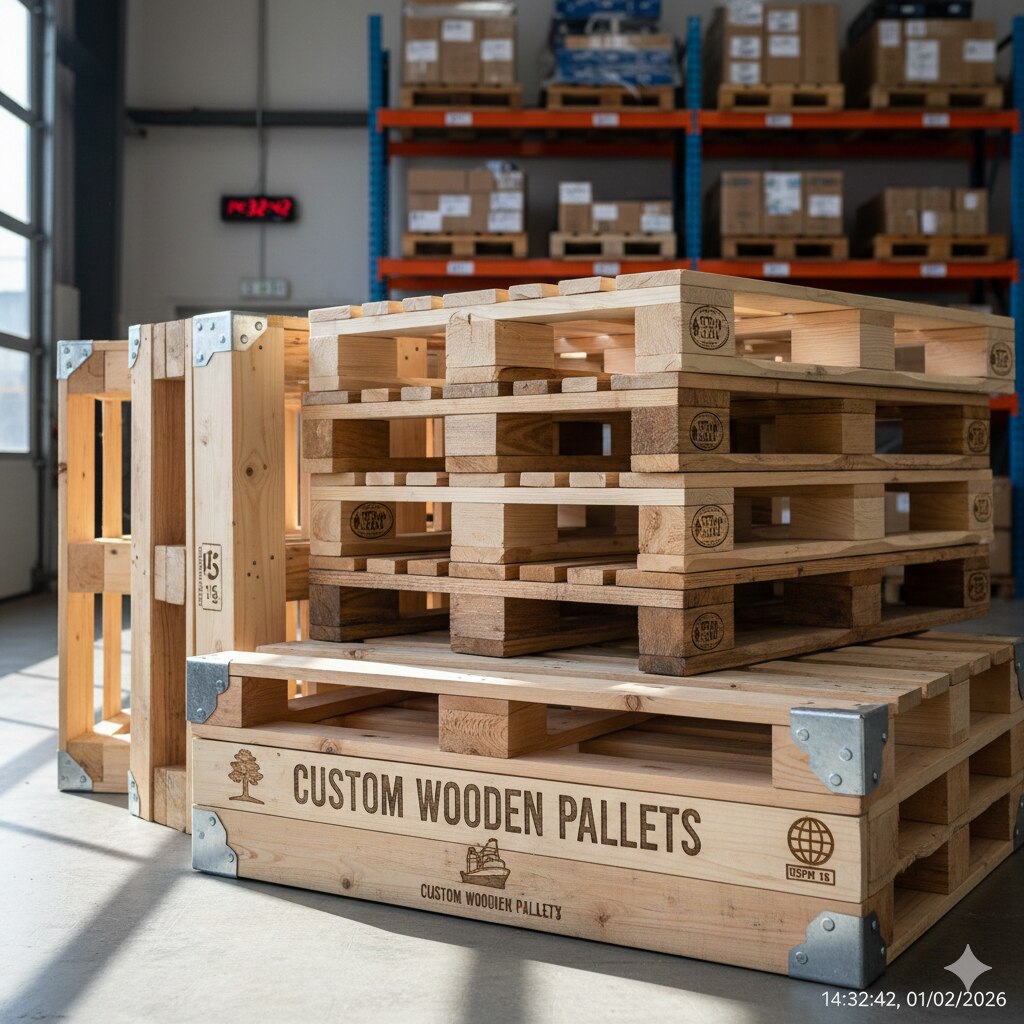 | Export & Customized Pallets Customized Wooden Pallets (Domestic & Export) Customized Wooden Pallets (Domestic & Export) Manufacturer & Supplier in Pune, Pimpri Chinchwad & Mumbai OM INDIA is a trusted manufacturer and... View product → |
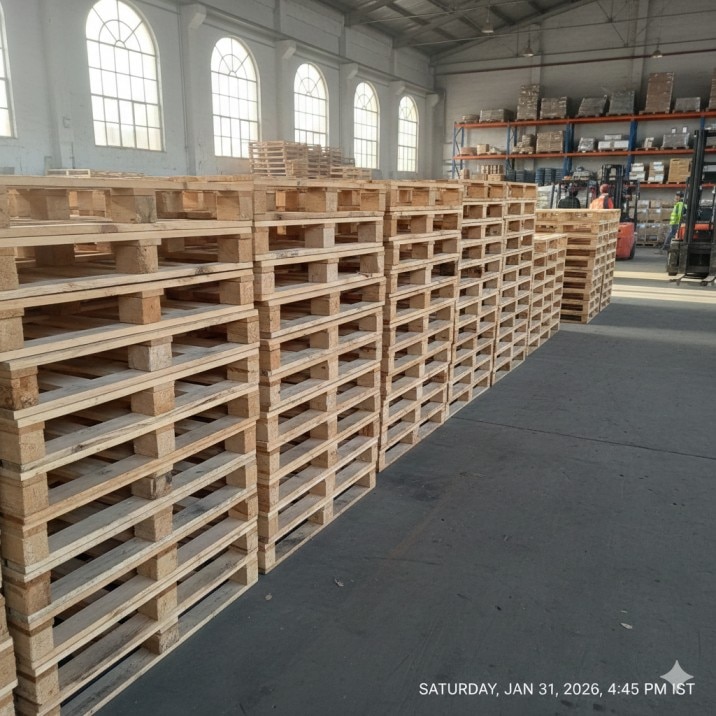 | Standard Wooden Pallets Manufacturer & Supplier in Pune, Pimpri Chinchwad & Mumbai OM INDIA is a reliable manufacturer and supplier of Standard Wooden Pallets designed for... View product → |
Frequently asked questions
What information is needed before preparing a wooden pallet for an engineering shipment?
Provide the machine’s weight, dimensions, centre of gravity, support points, lifting method, handling equipment, route, storage conditions and destination requirements.
How do you design an engineering pallet for machinery transport?
Position bearers and runners beneath the machine’s actual load points, then add blocking, bracing and fasteners that distribute weight without stressing fragile components.
How can irregular equipment be secured without blocking handling access?
Use shaped blocking, chocks, braces and rated tie-downs around the equipment while keeping forklift pockets, crane lifting points and sling paths unobstructed.
What should you inspect before dispatching a machinery pallet?
Check timber condition, fastener tightness, blocking, edge protection, moisture barriers, centre-of-gravity markings, lifting instructions and handling labels.
Related products
 | Standard Wooden Pallets Manufacturer & Supplier in Pune, Pimpri Chinchwad & Mumbai OM INDIA is a trusted manufacturer and supplier of Open Boarded Wooden Pallets, designed... View product → |
 | Wooden Pallets Wooden pallets are sturdy, flat, wooden platforms used to support goods for stable stacking, storage, and transport, allowing them to be moved... View product → |
 | Export & Customized Pallets Manufacturer & Supplier in Pune, Pimpri Chinchwad & Mumbai OM INDIA is a trusted manufacturer and supplier of Export & Customized Pallets, offering... View product → |
 | Standard Wooden Pallets Manufacturer & Supplier in Pune, Pimpri Chinchwad & Mumbai OM INDIA is a reliable manufacturer and supplier of Close Boarded Wooden Pallets, designed... View product → |
Keywords