Industrial goods face a very different journey from ordinary consumer products. Machinery, engineering components, fabricated assemblies, electrical equipment and other high-value products may pass through factories, warehouses, loading yards and multiple transport points before reaching their destination. Industrial packaging is designed to protect these goods throughout that journey.
For manufacturers and engineering businesses in Pune, packaging is therefore more than an outer covering. It forms an important part of safe material handling, storage and transportation.
OM INDIA supports industrial packaging requirements in Pune for businesses that need packaging suited to the size, weight, handling method and transportation conditions of their products.
What Is Industrial Packaging?
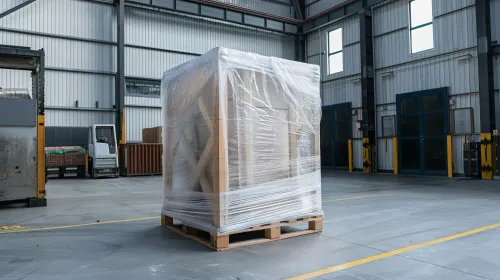
Industrial packaging refers to protective packaging developed for machinery, equipment, components and bulk commercial goods. Unlike standard retail packaging, it may need to withstand substantial weight, vibration, stacking pressure, moisture exposure and repeated handling.
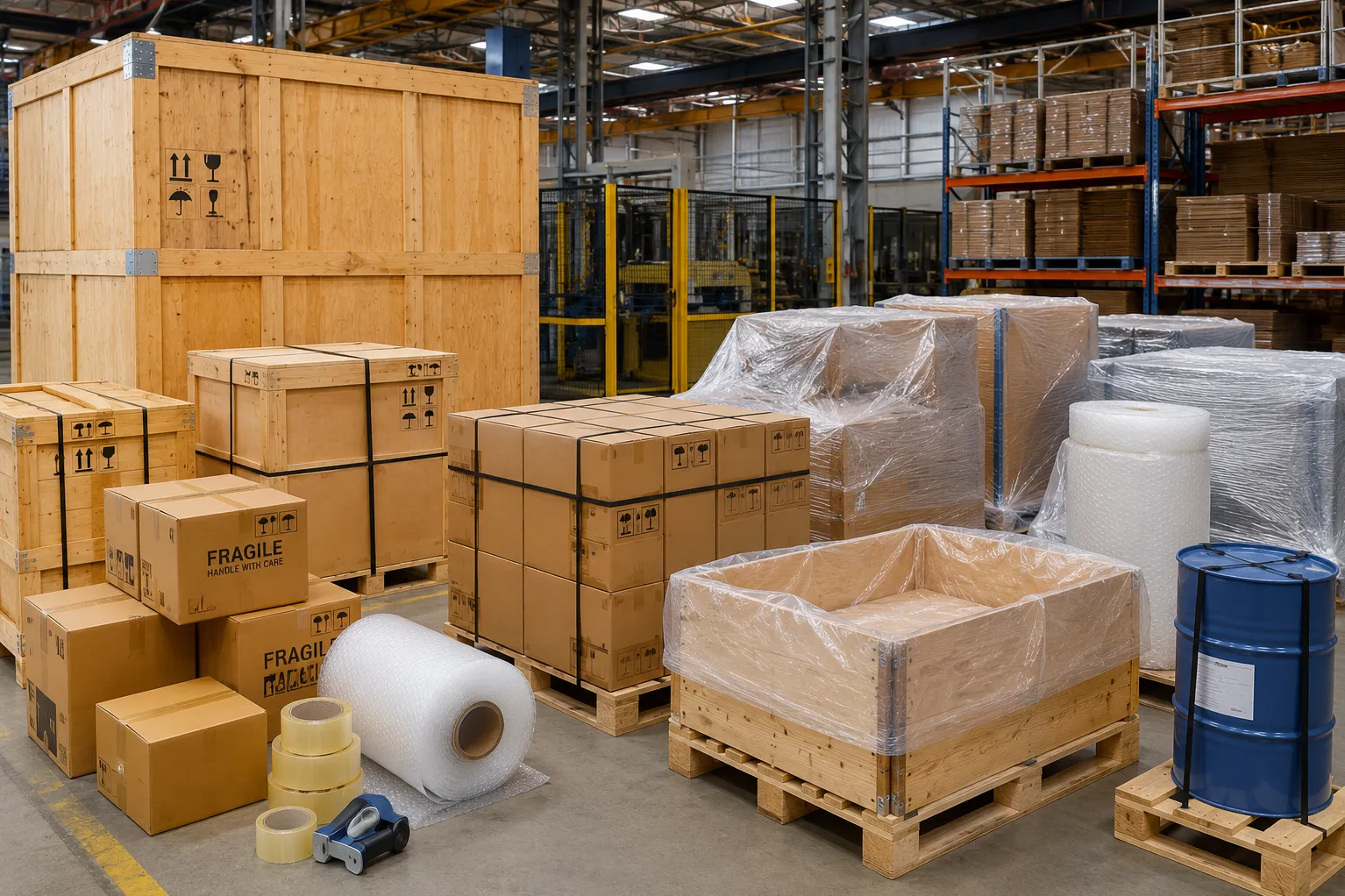
Depending on the product, an industrial packaging solution may include:
- Wooden boxes and crates
- Heavy-duty packaging structures
- Protective wrapping
- Internal supports and cushioning
- Moisture-protection materials
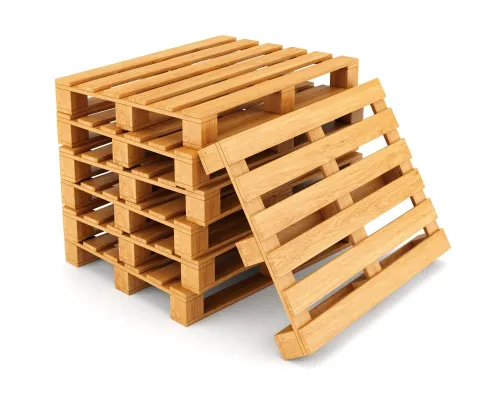
- Pallets and bases
- Strapping and securing arrangements
- Custom packaging for unusual dimensions
The objective is to create suitable protection without making loading, lifting or unpacking unnecessarily difficult.
Why Pune Manufacturers Need Product-Specific Packaging
Pune and the surrounding industrial belt support automotive, engineering, manufacturing, fabrication and equipment-related businesses. Products moving from these facilities can differ significantly in dimensions, weight and sensitivity.
A compact precision component may require protection from shock and moisture. A large machine may need a reinforced wooden base capable of supporting its weight during lifting. Export-bound equipment may require additional protection because it will remain packed for longer and pass through more handling stages.
Using the same packaging method for every product can therefore create avoidable risks.
What Should Be Considered Before Packaging?
Effective packaging begins with understanding the shipment itself. Important considerations include product dimensions, total weight, centre of gravity, fragile areas and lifting points.
The transportation method also matters. Road transportation can expose goods to vibration and sudden movement, while sea transportation introduces additional concerns such as humidity and prolonged storage.
Storage duration, stacking requirements and the method used for loading and unloading should also influence packaging design.
Industrial Packaging and Safer Material Handling
Well-planned packaging can make goods easier to handle throughout the supply chain. A suitable base can provide better support during forklift movement, while internal blocking can help restrict unwanted movement inside a wooden box.
Clear access for lifting equipment is particularly important for heavy industrial goods. Packaging should protect the product while remaining compatible with practical handling requirements at factories, warehouses and customer sites.
Building Packaging Around the Product
There is no single packaging format that suits every industrial shipment. The right approach depends on what is being packed, where it is travelling and how it will be handled.
For businesses across Pune and Maharashtra, understanding these factors before dispatch can help reduce packaging-related risks and create a more organised transportation process. Industrial packaging works best when it is treated as part of logistics planning rather than as the final task before dispatch.
Keywords