Export shipments can remain in transit for weeks and pass through several logistics environments before reaching their final destination. During that time, industrial equipment may encounter humidity, vibration, repeated handling and storage conditions that differ significantly from domestic transportation.
Seaworthy packaging is intended to prepare suitable industrial goods for these demanding transportation conditions.
For manufacturers and exporters in Pune, planning the packaging before equipment reaches the dispatch stage can make export logistics considerably more organised. OM INDIA provides industrial and seaworthy packaging support in Pune for machinery, engineering products and other export consignments.
What Does Seaworthy Packaging Mean?
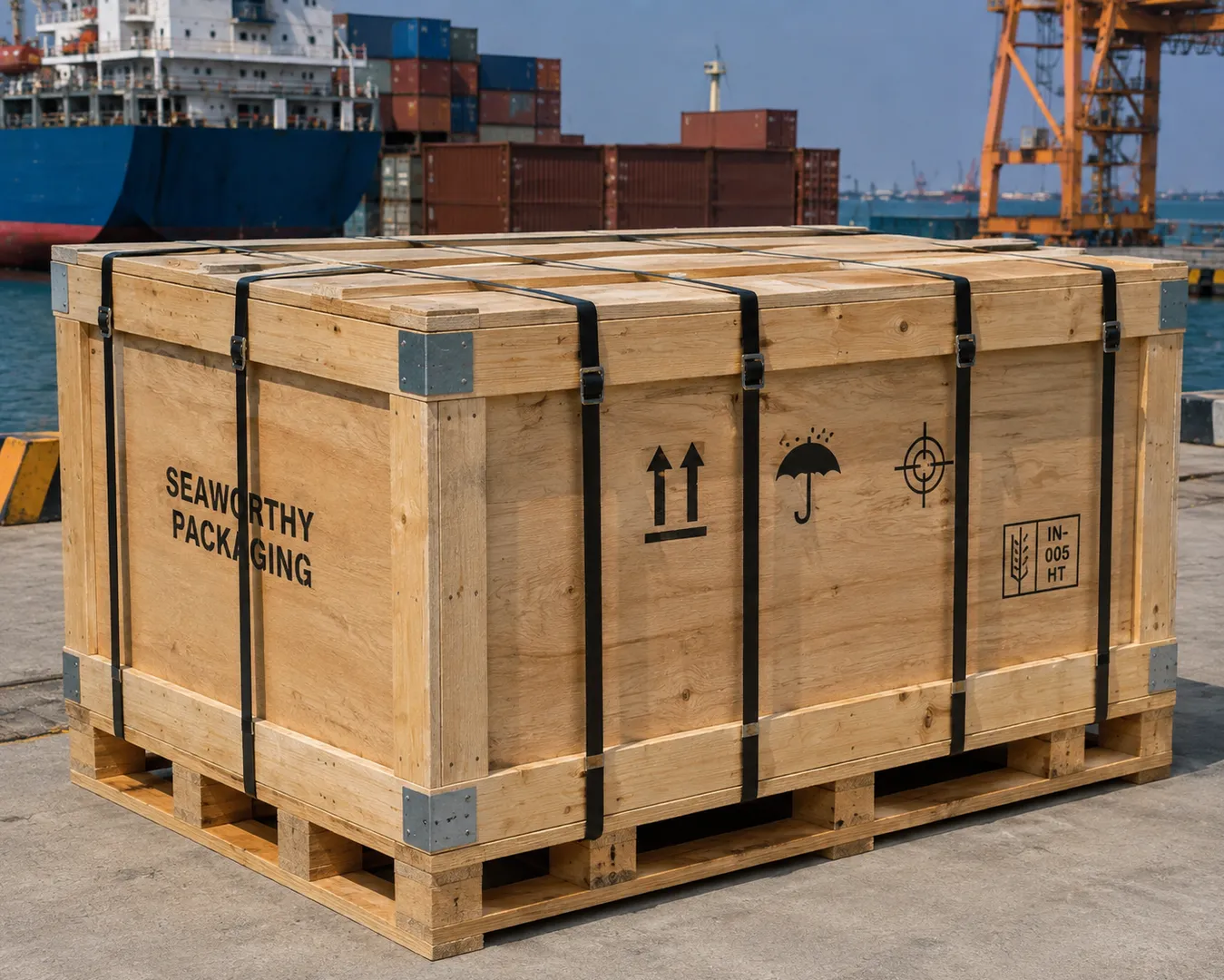
Seaworthy packaging refers to packaging prepared with the conditions associated with sea transportation in mind.
The exact packaging method depends on the product, but the overall objective is to protect the shipment against relevant environmental and mechanical risks throughout transportation.
A seaworthy packaging arrangement may incorporate:
- Strong wooden boxes or crates
- Suitable structural bases
- Moisture-resistant protection
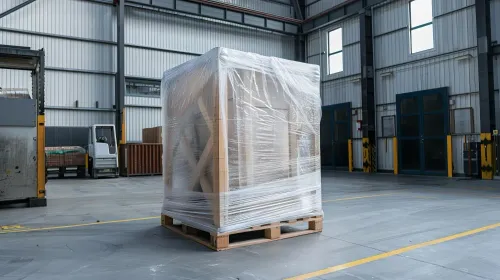
- Barrier wrapping
- Desiccants where appropriate
- Internal blocking and bracing
- Protective cushioning
- Secure strapping and fastening
Not every shipment needs every layer. Packaging should be selected according to the equipment and transportation conditions.
Why Is Moisture an Important Consideration?
Sea transportation can expose shipments to changing temperatures and humidity. Condensation inside packaging can become a concern for metal equipment, electrical components and precision machinery.
Depending on the product, suitable barrier materials and moisture-control measures may be incorporated into the packaging system.
This protection needs to be planned carefully. Simply enclosing equipment in a wooden box does not automatically provide complete moisture protection.
Preventing Movement Inside the Package
Even when the exterior packaging remains intact, equipment can be damaged if it moves excessively inside the enclosure.
Blocking and bracing help restrict this movement. Heavy machinery may also need to be secured appropriately to its base according to its weight distribution and lifting requirements.
The packaging should account for vibration, acceleration, braking and handling throughout the logistics journey.
Why Export Packaging Starts Before Dispatch
Export packaging is easier to manage when packaging requirements are discussed early.
Exporters should ideally know:
- The dimensions and weight of the equipment
- The destination and expected transportation route
- Whether containerised shipping will be used
- How the equipment will be lifted
- Whether moisture-sensitive components are present
- How long the shipment may remain packed
These details influence the packaging approach.
Supporting Export Shipments from Pune
Pune's manufacturing ecosystem serves domestic as well as international supply chains. Industrial goods produced in the region may travel from factories to ports before beginning their overseas journey.
That extended logistics chain makes appropriate packaging an important operational consideration.
Seaworthy packaging should ultimately reflect the risks associated with the actual shipment. Matching structural protection, moisture control and internal securing methods to the product can help exporters prepare industrial equipment more effectively for long-distance transportation.
Keywords