Export packaging fails when the foam is chosen by appearance or density alone. You need to match the EPS grade, geometry and outer-pack design to the product’s mass, fragile zones, drop risk, stacking load, moisture exposure and shipment route before placing an order.
Key takeaways
- Match EPS density and thickness to product weight, drop risk and sustained load.
- Use molded or fabricated inserts to prevent movement, impact and compression damage.
- Check supplier samples, drawings, tolerances and export-pack integration before approval.
- Choose EPE, polyurethane foam or plywood supports when EPS lacks the required performance.
What EPS is—and how it compares with other export cushioning materials
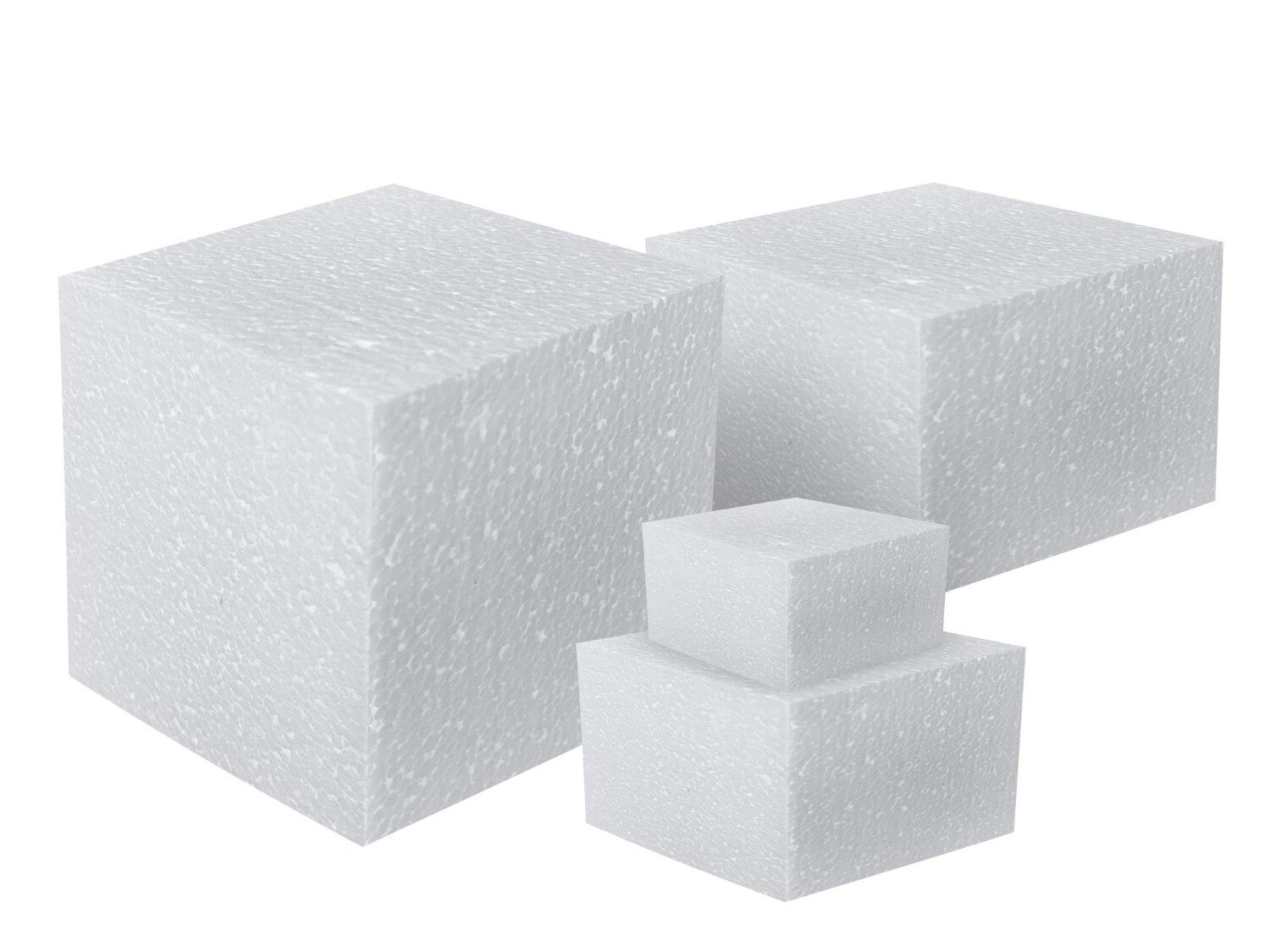
EPS is made by expanding polystyrene beads and fusing them into a lightweight, closed-cell structure. The fused beads give it rigid cushioning, low mass and good shape retention, so it suits products that need a defined cavity and stable support rather than a soft wrap.
| Material | Main behaviour | Prefer it when |
|---|---|---|
| EPS | Rigid, lightweight, shape-retaining cushioning | You need formed support around heavy or fragile parts |
| EPE | Flexible, resilient, repeated-impact cushioning | The product needs a softer fit or repeated handling |
| Polyethylene foam | Tougher, finer-cell cushioning with good surface protection | You need durability, reuse or a cleaner finished contact surface |
| Polyurethane foam | Softer, conforming cushioning; grades vary widely | Irregular shapes need close conformity and loads are moderate |
| Molded pulp | Formed fibre support with different moisture and compression behaviour | Fibre packaging, stacking design and disposal goals outweigh EPS’s rigidity |
EPS is not a complete export pack. It is not a watertight barrier, not automatically antistatic or flame-retardant, and not a substitute for a rigid crate, blocking, bracing or moisture barrier. Add those controls when rain, condensation, sea freight, forklift movement, stacking or overturning threatens the cargo.
An expanded polystyrene foam supplier in Pune should select the grade and geometry from the product’s mass, fragility, contact areas and distribution hazards—not sell every shipment the same block or sheet. The same principle applies when specifying EPS foam packaging in Pune: approve the finished pack, not foam alone.
How to size EPS for weight, fragility and sustained load
Sizing starts with the load case, not the foam block. Give the pack designer:
- Product mass, packed dimensions and centre of gravity.
- Fragile surfaces, projecting parts and approved support points.
- Allowable shock, expected drop height and handling orientation.
- Expected stack load, including the number of packages above it and the lowest support area.
Density and geometry work together. Higher-density EPS generally increases compressive strength and handling durability, but density alone cannot match foam to a drop height or product fragility. Use a cushion curve or product-specific compression data to select the grade and thickness.
For heavy equipment, increase bearing area and distribute weight across continuous supports rather than thin pads under concentrated feet. Check sustained compression at the lowest support point: compression set can permanently reduce thickness, and bottoming-out transfers impact into the equipment.
EPS foam for export packaging in Pune should be assessed for static load as well as drop cushioning.
Fit the cavity to immobilize the product without forcing it into position. Support load-bearing zones, avoid point loading on housings, connectors, valves and painted surfaces, and leave clearance around vulnerable faces. Prevent unsupported spans that allow vibration; an overly tight cavity can transmit impact directly into the product.
A documented design matters when selecting expanded polystyrene packing foam in Pune, because a lower-density replacement can change both cushioning and load capacity.
Choosing the EPS format and building it into an export pack
For buyers specifying eps foam packaging in pune, choose the format by repeatability, geometry and restraint—not foam availability. A repeatable molded insert suits a high-volume product with fixed dimensions; CNC-cut or hot-wire-cut blocks suit changing products and short runs.
EPS foam for export packaging in pune still needs a rigid carton or crate, blocking and bracing.
| Option | Best use | Limitation |
|---|---|---|
| Molded EPS parts | High-volume, repeatable cavities | Tooling cost and fixed geometry |
| CNC- or hot-wire-cut blocks | Prototypes, changing dimensions | More joints and manual fitting |
| Sheets | Base pads, separators and load distribution | Limited contour support |
| Corner pieces | Edge and corner protection | Do not immobilize the whole product |
| Inserts | Local support around fragile features | Require accurate placement |
| Loose-fill pieces | Filling small voids around light items | Shift under vibration; poor restraint for heavy or precision equipment |
| Fabricated box liners | Full internal lining for cartons or crates | Must be designed around loads and clearances |
Install the pack so it protects painted and finished surfaces, supports projecting parts, blocks sliding and overturning, spreads load across the base, restrains movement and prevents thin edges from crushing. Design for vibration, repeated handling, forklift movement, stacking and drop impacts; one shock-absorption claim is not enough.
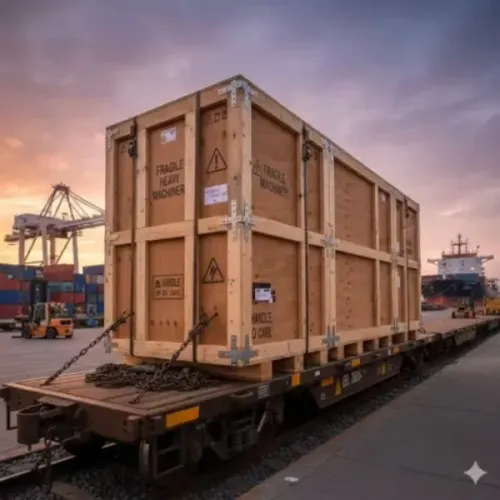
For sea freight, add a moisture barrier with sealed liners or joints, a specified desiccant load and controlled ventilation. Any timber crate, pallet or dunnage also needs ISPM 15 treatment and the official mark; EPS is not wood packaging material.
How to assess an EPS supplier in Pune before approving the pack
Approve an EPS pack only when the supplier can show how its design protects your specific cargo, not merely quote a foam density or block size. If you search “buy eps foam in Pune”, use this checklist before releasing a purchase order.
1. Request an approved drawing showing cavity dimensions, support points, clearances, restraint method, foam density or mass-per-volume record, dimensional tolerances and compression data. The drawing must identify the product mass, centre of gravity and load-bearing zones.
2. Require lot or batch traceability for every delivery. Confirm that replacement parts match the approved grade and drawing; a visibly similar, lower-density insert can change cushioning and load-bearing performance.
3. Review the completed pack against the actual route. Check truck or container conditions, handling orientation, stack height, forklift transfer points, sliding or overturning risk and expected drop or impact hazards.
4. Run a finished-pack trial where practical. Use ASTM D4169 distribution cycles for the selected handling, vibration, compression and impact hazards, and ASTM D1596 for dynamic shock cushioning.
5. Select the test level from the shipment route and assurance level, not from a generic template. Record failures, foam deformation and product movement, then revise the pack before approval.
An expanded polystyrene foam supplier in Pune should provide this evidence for the specific cargo. OM INDIA can be considered alongside other Pune suppliers only after it documents these design and quality details.
Related product
 | Packaging Foam Manufacturer & Supplier in Pune, Pimpri Chinchwad & Mumbai OM INDIA is a trusted manufacturer and supplier of Expanded Polystyrene Foam, designed to... View product → |
When EPS is the wrong choice for export cargo
Very high sustained loads are a warning: choose another cushioning material unless bearing area, thickness and compression performance are verified. A heavy item can compress EPS over time, bottom out, or lose its clearance even when a drop test passes.
An expanded polystyrene packing foam in Pune supplier should provide compression data for the actual grade, geometry and load.
Move the design to a documented special grade or another material when the cargo will face hot surfaces, sparks or welding. EPS is combustible; fire performance depends on grade, additives, thickness, assembly and test method, not on a generic “flameproof” claim.
Require compatibility confirmation before petroleum-based solvents, solvent-containing paints, adhesives, release agents or cleaners contact the foam. Solvent damage can weaken cell structure while leaving no obvious mark. EPS foam for export packaging in Pune should not be approved from a visual inspection alone.
Use a complete moisture and corrosion-control system for severe humidity, condensation or corrosion-sensitive equipment; EPS alone is not a moisture barrier. Do not select it as the sole restraint for repeated reuse.
- Specify antistatic or flame-retardant performance only when the supplier confirms the treatment, grade and intended-use test basis.
- Replace EPS or document the special grade when chemicals, ignition sources, sustained loads or repeated handling exceed the verified design.
- State whether the consignee will remove, compact, return or dispose of the foam. Recovery depends on contamination, labels, tapes, low bulk density and local acceptance; “recyclable” does not guarantee acceptance.
Frequently asked questions
How do you size EPS foam for export packaging?
Size it from the product weight, fragility, expected handling drops, contact area and sustained load. Confirm the foam’s density, thickness and compression performance with a trial pack.
Which EPS format suits an export pack?
Use molded EPS for repeatable cavities and complex shapes. Use fabricated blocks, sheets or profiles for low-volume products, larger components and packs that need quick changes.
What should you check before approving an EPS foam supplier in Pune?
Request a material specification, density range, dimensional tolerances, sample inserts, production drawings and a completed trial pack. Check whether the supplier can integrate the foam with crates, barriers and moisture protection.
When is EPS the wrong choice for export cargo?
Choose another material when the pack faces high sustained loads, severe vibration, fire exposure, solvent contact, tight dimensional limits or unusual humidity requirements. Compare EPE, polyurethane foam, corrugated structures and timber supports.
Keywords