A quotation that says “heat treated” does not prove that export wood meets ISPM 15. You will be able to specify the correct treatment, compare Pune providers, prepare the booking details, and check the mark and documents before the shipment leaves.
Key takeaways
- Require 56°C at the wood core for 30 continuous minutes.
- Send timber dimensions, quantities, packaging design and destination country.
- Check the IPPC mark includes the provider number and HT code.
- Confirm whether the destination requires fumigation instead of, or alongside, HT.
What ISPM 15 HT treatment actually requires
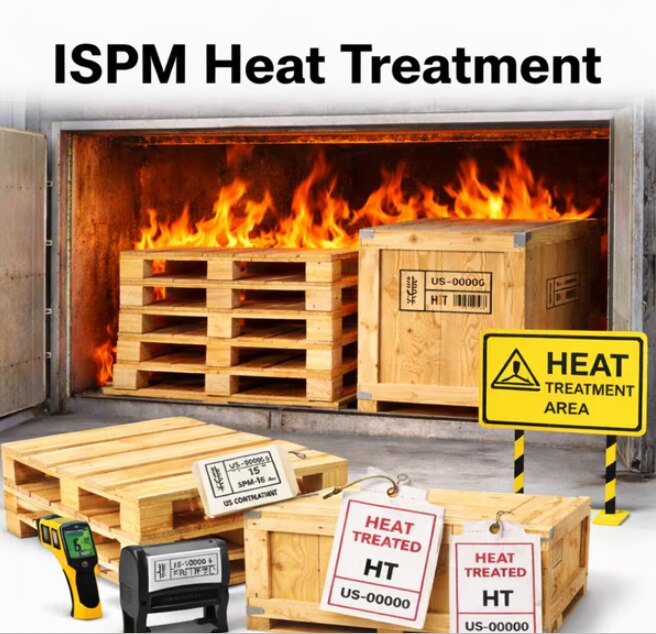
ISPM 15 HT is a pest-risk treatment, not ordinary kiln drying. The wood core—not chamber air or the surface—must reach at least 56°C for 30 continuous minutes. For ISPM heat treatment HT in Pune, ask how the provider identifies and monitors the coldest point in the thickest timber component.
- Request time-and-temperature records showing the required core exposure, not only a kiln setting or surface reading.
- State the maximum timber thickness and ask where probes will be placed; a warm chamber does not prove the centre of a thick skid was treated.
- Specify separate moisture-content limits, covered-storage conditions and dispatch protection if the packaging must remain dry.
ISPM heat treatment in Pune will not prevent later warping, moisture absorption or mould. Those problems arise from drying, rain, condensation and storage conditions, so include them in the packaging specification rather than treating HT as a moisture-control service.
Debarking also has a defined tolerance. Bark pieces must be under 3 cm wide, regardless of length, or pieces wider than 3 cm must each have a surface area below 50 cm². Clean-looking timber is not automatically compliant, and visibly marked timber is not automatically suitable if bark or treatment evidence fails inspection.
What to send when requesting an HT treatment quotation
Send a complete specification for ISPM 15 HT before asking for a price. A vague request for ht treatment wooden packaging in pune can produce a quotation that excludes thick components, loose dunnage or return transport.
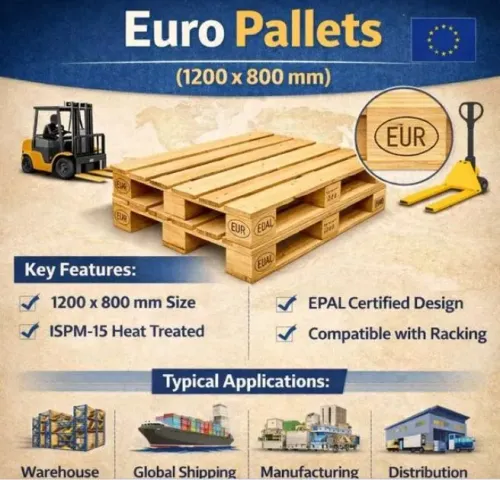
- State the wood species or material type, maximum component thickness, pallet or crate dimensions, quantity, destination country and required dispatch date.
- Attach photographs showing the assembled packaging, timber sections, runners, braces and cleats. Include the pickup location and say whether treatment is required before or after packing or assembly.
- Identify every solid-wood item that will travel with the shipment, including loose dunnage and blocking. The provider must assess the packaging as exported, not an indicative pallet count; adding untreated pieces later can create a compliance failure.
- Ask whether the provider accepts customer-supplied pallets and crates, manufactures new packaging and treats it, or supports both workflows. Request the IPPC marking and treatment record requirements for your export wood heat treatment in pune booking.
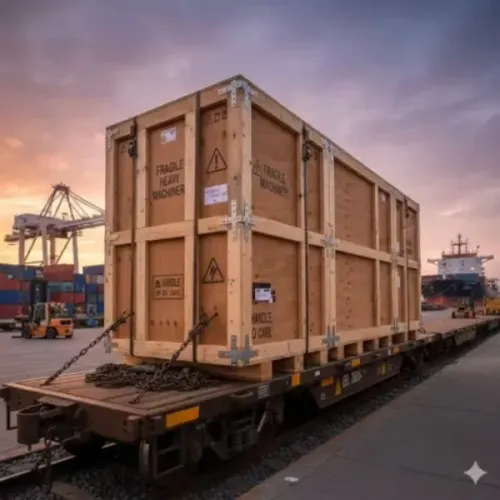
For heavy or over-dimensional cargo, confirm chamber dimensions, maximum timber-section size, stacked-load limits and who handles loading, unloading and transport. A finished crate footprint alone does not show whether large beams or dense skids can reach the required core temperature uniformly.
How a Pune provider should handle inspection, treatment and release
Start with a quotation that names the destination, ISPM 15 HT scope, maximum timber thickness, dimensions, quantity and dispatch date. For ispm heat treatment in pune, confirm whether treatment occurs before or after assembly and whether the provider accepts customer-supplied packaging, manufactures and treats new packaging, or supports both routes.
OM INDIA is one Pune packaging-services provider to ask about these two workflows.
1. Inspect the wood and assembled packaging, including loose dunnage, blocking, runners, braces and cleats. Freeze the treatment scope against the packaging actually being exported, not an indicative pallet count that can change later.
2. Schedule a chamber slot after confirming the destination country, pickup or return responsibility, load dimensions and handling limits. For heavy skids or large timber sections, verify capacity against the thickest component and stacked-load limits.
3. Load the packaging with probes placed at the coldest point in the thickest timber. Monitor the wood core until it reaches 56°C for 30 continuous minutes, then retain the time-and-temperature record.
4. Apply the rectangular IPPC mark after treatment and prepare the treatment certificate, treatment batch reference and load identification. Ask for the provider’s authorization or registration details and exact marking identification.
5. Review the mark, certificate, quantity and load reference before release. Collect the packaging only after corrections are complete, or have it returned for rework; this matters when checking heat treated pallets in pune.
Related products
 | ISPM-15 Compliance Services ISPM Heat Treatment (HT) Service Provider in Pune, Pimpri Chinchwad & Mumbai OM INDIA is a trusted provider of ISPM Heat Treatment (HT) Services,... View product → |
 | ISPM-15 Compliance Services Provider in Pune, Pimpri Chinchwad & Mumbai OM INDIA is a trusted provider of ISPM-15 Compliance Services, offering certified treatment solutions for... View product → |
How to check the IPPC mark and treatment documents
Before loading, verify heat-treated pallets in Pune or treated crates by checking the rectangular IPPC mark, not just a supplier’s statement. It must show:
1. The IPPC symbol, the two-letter country code, the unique producer or treatment-provider code, and the treatment code HT.
2. A permanent, legible mark on at least two external sides. Reject marks printed on removable labels, paper tags or disposable components; a generic invoice saying “heat treated” is not equivalent.
3. For export wood heat treatment in Pune, request a treatment certificate containing the treatment date or batch number, load identification, packaging quantity, dimensions if recorded, and the exact IPPC-mark details. Match the certificate to the invoice or packing-list reference before dispatch.
4. Ask for the provider’s authorization or registration details and confirm that the record covers the pallets, crates, loose dunnage and replacement timber actually being shipped.
Stop dispatch if the mark is missing, blurred or unreadable. Ask the provider to correct the mark and confirm whether re-treatment is required; do not apply a new mark yourself. Inspect every replacement component on a repaired or reused pallet, because an old mark does not automatically cover newly fitted wood.
When to choose HT and when to check for fumigation
Choose HT when the destination accepts ISPM 15 heat treatment for the solid-wood packaging you are shipping.
Controlled heat brings the wood core to the required temperature and produces an IPPC mark containing the treatment code HT; this is what a booking for ispm heat treatment in pune or ispm heat treatment ht in pune should deliver.
| Option | Treatment and evidence | Marking |
|---|---|---|
| ISPM 15 HT | Controlled heat with an HT treatment record and load identification | IPPC mark with country code, provider code and HT |
| Fumigation | Chemical treatment; required certificate, seal or mark depends on the importing scheme | Do not assume an HT mark applies |
Before booking, check:
- The destination country’s official import-condition database or plant-protection authority notice
- The importer’s written instructions
- The carrier or freight forwarder’s cargo requirements
Do not book both treatments automatically. Do not accept an unspecified “fumigation/HT certificate”; ask which treatment was performed, under which scheme, and what marking is required.
Match the decision to the packaging actually exported, including loose dunnage, blocking, runners and cleats. Added untreated solid wood can invalidate an otherwise compliant marked pallet.
Packaging details that can invalidate an otherwise correct booking
An IPPC mark on a pallet does not cover every piece in the shipment. Plywood, oriented strand board, fibreboard and similarly processed panels are generally outside the solid-wood ISPM 15 requirement; wood components 6 mm thick or less are also excluded. Attached solid-wood runners, skids, blocking, braces and cleats need separate assessment.
A repaired or reused pallet is not automatically compliant. Replacement components need compliant treatment. If packaging is remanufactured beyond the ISPM 15 repair threshold, remove the old marks, re-treat the packaging and apply a new mark.
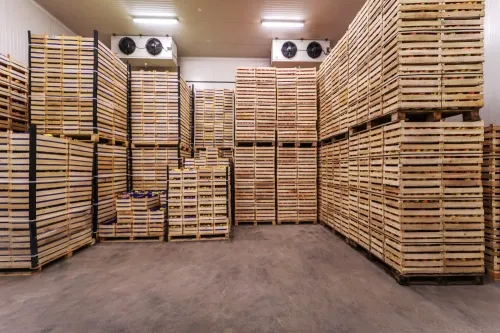
After export wood heat treatment in Pune, confirm storage under cover. Rain or condensation can cause swelling, mould or warping without cancelling the HT treatment history, so specify covered storage and dry-dispatch conditions separately.
Before dispatch, confirm:
- Destination country and maximum timber thickness.
- Treatment scope, including loose dunnage, blocking and attached components.
- HT mark visibility on the exported packaging.
- Treatment certificate, load or batch reference and quantity.
- Whether replacement timber was treated.
- Carrier acceptance of the packaging and documents.
- Storage under cover after HT treatment wooden packaging in Pune.
- The physical packaging matches the booking.
Frequently asked questions
What temperature and duration does ISPM 15 heat treatment require?
The wood core must reach at least 56°C for 30 continuous minutes. Chamber air temperature and surface temperature do not prove compliance.
What information should you provide for an HT treatment quotation in Pune?
Send the timber species, dimensions of the thickest components, quantity, packaging type, treatment location, destination country and required release date.
How can you check an IPPC mark on treated wood?
Check that the mark is legible and includes the IPPC symbol, the country code, the registered provider number and the HT treatment code.
When should you check for fumigation instead of heat treatment?
Check the importing country's rules and cargo requirements when they specify fumigation, require a separate phytosanitary document or identify a pest risk that HT alone does not address.
What packaging details can invalidate an HT booking?
Undisclosed thick timber, assembled sections that block heat penetration, mixed untreated wood and changes to the packaging after treatment can invalidate an otherwise correct booking.
Related products
 | Export & Customized Pallets Manufacturer & Supplier in Pune, Pimpri Chinchwad & Mumbai OM INDIA is a trusted manufacturer and supplier of Export & Customized Pallets, offering... View product → |
 | Wooden Packaging Boxes Manufacturer & Supplier in Pune, Pimpri Chinchwad & Mumbai OM INDIA is a trusted Wooden Boxes manufacturer and supplier offering high-strength,... View product → |
 | Wooden Packaging Boxes Heavy Duty Wooden Boxes Manufacturer & Supplier in Pune, Pimpri Chinchwad & Mumbai OM INDIA is a reliable manufacturer and supplier of Heavy Duty... View product → |
 | Specialized Wooden Boxes Manufacturer & Supplier in Pune, Pimpri Chinchwad & Mumbai OM INDIA is a trusted manufacturer and supplier of Plywood Boxes designed for lightweight,... View product → |
Keywords