A recyclable PP box is not automatically a returnable distribution asset: material, construction, load limits and reverse logistics determine whether it works. You will be able to compare box formats, specify a usable design, validate performance and calculate the cost of running a box through repeated distribution cycles.
Key takeaways
- Confirm the box’s polypropylene grade, dimensions and maximum working load.
- Test foldable boxes through stacking, transport and return handling before rollout.
- Compare cost per usable cycle, not purchase price alone.
- Match box strength and protection to the product, route and handling method.
What a Recyclable PP Box Is—and What the Label Leaves Out
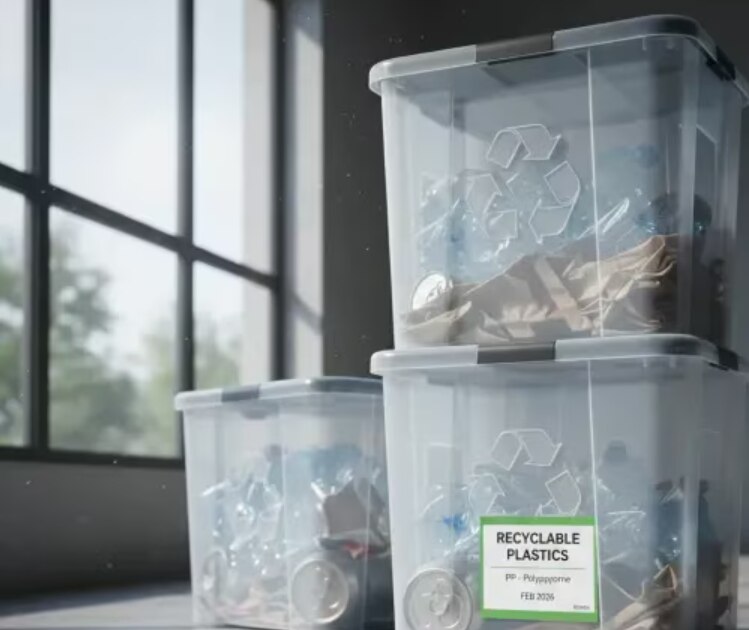
A recyclable PP box is a container made primarily from polypropylene, not a guarantee that every part will be recovered. Most recyclable PP boxes in Pune use corrugated twin-wall polypropylene sheet: lightweight, creaseable and die-cut, but less compression-resistant than a solid-wall tote. Common formats include foldable cartons, sleeves, layer pads and solid-wall totes.
Lids, hinges, hand holes, creases, die-cut panels and stacking rims affect handling and performance. Resin identification code 5 identifies PP, but it does not prove that a Pune recycler or collection contractor accepts the box’s actual format.
Separate these four procurement claims:
- Polymer identity: the box is PP.
- Recycled content: the supplier states post-consumer or post-industrial recycled material separately.
- End-of-life recyclability: a named recycler or contractor accepts the used box, including its sheet, closures and attached parts.
- Returnability: a controlled system collects, inspects and redeploys the box for further trips.
Clean, predominantly mono-material construction improves recovery. Removable labels and separable inserts help; laminated films, bonded plastics, foam, metal fasteners and incompatible adhesives complicate sorting and processing.
This matters when comparing recyclable plastic boxes in Pune or searching for recyclable pp boxes in pune: a returnable box still fails if customers do not send it back, while a recyclable box still needs an accepted recovery route.
How to Run a Box Through a Pune Distribution Loop
Run each box as a tracked asset, not as disposable packaging:
1. The supplier packs and marks every box or batch with an ID, then records dispatch date, destination, pallet footprint and vehicle. Assign one owner, set a return deadline and confirm the box suits manual or automated handling.
2. The receiver counts full boxes against the dispatch record, separates empties immediately and records the return date. Keep mixed-route empties in labelled lanes; unreliable customers need deposits, scheduled collection or a loss allowance.
3. Plan the empty loop before purchase. Record the nesting or folding ratio, such as 4:1, empty-box stack height, storage volume, pallet count and return-freight space. Outdoor staging needs weather protection because dirt and water increase cleaning and contamination work.
4. Cycle-test hinges, fold lines, closures and hand holes. Repeated opening by workers concentrates force at these points; automated conveyors also expose weak closures and distorted edges.
5. Remove dust, oil and product residue with a detergent compatible with polypropylene and the product-contact requirement. Rinse when the detergent instructions require it, dry every surface fully before stacking, then inspect each unit.
6. Quarantine boxes with cracks, deformation, failed closures, sharp damage, persistent odour or contamination that cleaning cannot remove. Redeploy only approved boxes, and update the usable-cycle record.
For reusable distribution boxes in Pune, completed usable cycles—not purchase price—decide whether the loop works. Include reverse transport, cleaning, storage, repairs and losses in the calculation; choose one-way packaging when returns remain unreliable.
Specify Dimensions, Loads and Protection Before You Order
Before you buy recyclable pp boxes, give the supplier a measurable load brief:
- Product length, width, height, mass and centre of gravity
- Quantity per box, separators or liners, pallet footprint and required tolerances
- Lid type, closure, hand holes, forklift access and manual-handling limits
- Maximum stacking height, stacking duration, and whether the load is static or dynamic
- Empty-box nesting or folding ratio and available return-storage space
Specify internal usable dimensions separately from external dimensions. The product must fit inside the clear cavity; external dimensions determine pallet utilisation, vehicle space and aisle clearance.
| Protection requirement | Specify | Failure if omitted |
|---|---|---|
| Moisture and dust | Seal, cover, liner or vent arrangement | Corrosion, contamination or trapped condensation |
| Abrasion and impact | Surface, corner and separator protection | Scuffed parts, cracked walls or damaged edges |
| Compression | Filled-load stack height and duration | Lower boxes deform or closures release |
State the route’s lowest and highest temperatures, humidity, outdoor exposure and storage conditions. PP softens as temperature rises and can become more impact-brittle in cold conditions; request the supplier’s tested service-temperature range and validate both route extremes.
Compression depends on geometry, vents, corners, closure, load distribution, time, humidity and temperature. Run a filled-load test with a safety factor, not an empty-box test alone, then use an ASTM D4169 distribution test cycle matched to handling, vibration, stacking and environmental conditions.
Choose the Right Box for the Route, Product and Handling Method
Choose a returnable PP box only when the same shipper and receiver can control collection, the product faces repeated handling, moisture resistance matters, and empty returns do not erase the operating benefit.
| Option | Best fit | Main trade-off |
|---|---|---|
| One-way box | A single shipment where return control is weak | No reverse logistics, but recurring replacement cost |
| Returnable PP box | A controlled loop with repeated handling, moisture or dust exposure | Empty storage, collection, cleaning and loss control |
| Corrugated carton | One-way routes where low empty volume, cushioning or printability matters | Lower resistance to moisture and repeated handling |
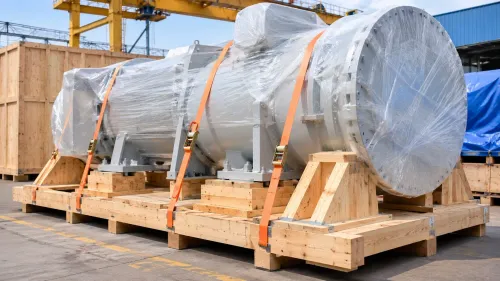
| Plywood box | Long export journeys requiring rigid protection and strong restraint | Added mass, handling effort and wood-packaging obligations |
For recyclable plastic boxes in Pune, compare completed usable cycles, not purchase price alone. A returnable unit loses its advantage when customers fail to return it or empty freight, storage and repairs become expensive. Reusable distribution boxes in Pune suit routes with reliable receiving controls.
Plywood is the safer choice when the shipment needs rigid structural protection or high restraint capability. PP packaging is outside ISPM 15’s raw-wood scope because that standard covers raw wood, not plastic; export shipments still need destination-country, carrier, waste and dangerous-goods compliance.
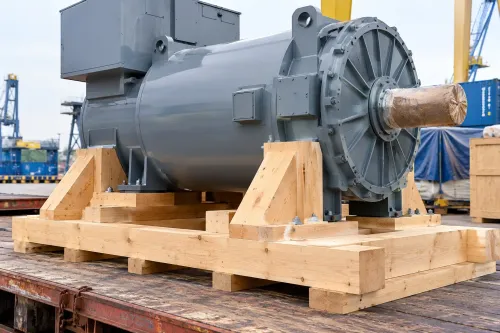
For heavy equipment and over-dimensional cargo, use PP boxes for small parts, service kits, documents and segregated components. Restrain the main machine independently with engineered blocking, bracing and restraint designed for sliding, tipping, impact and lifting forces.
Calculate the Cost per Usable Cycle and Approve the Supplier
A returnable box earns its place only when completed usable trips outweigh the full programme cost. Calculate cost per usable cycle as:
(purchase price + cleaning + repairs + sorting + tracking + empty-return freight + storage + loss + disposal) ÷ completed usable trips
Estimate break-even trips by dividing the purchase price by the avoided one-way packaging cost per trip. Then add reverse logistics and programme overhead; otherwise, a low purchase price hides an expensive return loop.
| Option | Cost and operating test | Environmental comparison |
|---|---|---|
| One-way carton | Suits weak return control and low empty-storage capacity | Lower reverse freight, but assess disposal and replacement volume |
| Returnable PP box | Wins when return rates, repair costs and cycle counts are controlled | Compare polymer mass, recycled content, cleaning energy and recovery route |
| Plywood box | Suits rigid restraint and long export journeys | Compare higher mass, reuse potential and end-of-life recovery |
For an “eco friendly pp boxes near me” claim, compare reverse distance, expected cycle count, repair rate and empty-box volume—not Pune delivery distance alone. Ask whether the declaration separately states PP identity, post-consumer or post-industrial recycled content, and end-of-life recyclability.
Before you buy recyclable pp boxes, approve a physical sample and obtain a written quality plan covering:
- Sheet thickness or grammage, dimensions and tolerances
- Colour, weld or stitch quality, closure retention and print adhesion
- Odour, contamination and lot traceability
OM INDIA can support the decision by matching a sample to your specification and documenting tested limits for the actual distribution route.
Related products
 | PP Boxes Manufacturer & Supplier in Pune, Pimpri Chinchwad & Mumbai OM INDIA is a trusted manufacturer and supplier of Recyclable PP Boxes, designed for... View product → |
 | PP Boxes Manufacturer & Supplier in Pune, Pimpri Chinchwad & Mumbai OM INDIA is a trusted manufacturer and supplier of PP Boxes, designed for durable,... View product → |
Frequently asked questions
What is a recyclable PP box?
It is a container made primarily from polypropylene, commonly corrugated twin-wall sheet, solid-wall plastic or a foldable die-cut format. Recyclability depends on the box design, added materials and available recovery process.
How should you run a PP box through a Pune distribution loop?
Map packing, stacking, vehicle loading, unloading, storage, return transport and cleaning. Inspect each box for crushed edges, split folds, punctures and contamination before its next cycle.
What specifications should you confirm before ordering recyclable PP boxes?
Provide internal length, width and height, product weight, stacking load, protection needs, closure style, handling equipment and route conditions. Ask the supplier for a sample and confirm working-load limits.
How do you choose between a foldable box, sleeve, layer pad and solid-wall tote?
Choose foldable cartons when empty-return volume matters, sleeves and layer pads for separation or pallet protection, and solid-wall totes for repeated handling and higher structural demands. Select based on product fragility, route length and handling method.
How do you calculate the cost per usable cycle?
Add purchase, printing, cleaning, repair, storage and return-transport costs, then divide the total by the number of cycles completed before replacement. Include losses and damaged-product risk in the comparison.
Related products
 | PP Boxes Manufacturer & Supplier in Pune, Pimpri Chinchwad & Mumbai OM INDIA is a trusted manufacturer and supplier of Returnable PP Boxes, designed for... View product → |
 | PP Boxes Manufacturer & Supplier in Pune, Pimpri Chinchwad & Mumbai OM INDIA is a trusted manufacturer and supplier of Customized PP Boxes, designed to meet... View product → |
Keywords