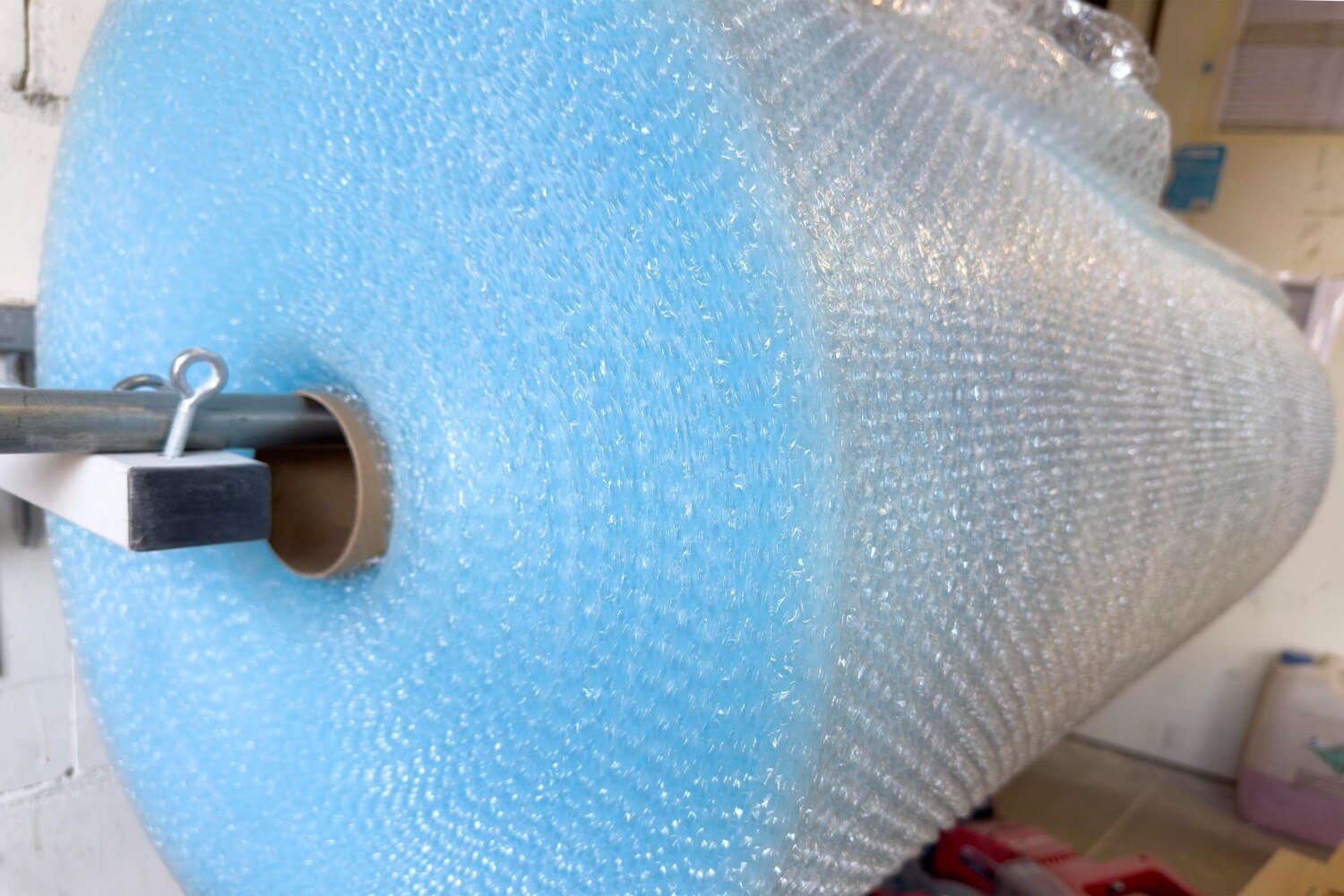
A glass panel, machined part and electronic assembly do not need the same bubble diameter, film gauge or wrapping pattern. By matching the roll to the product’s geometry, impact risk, surface finish and outer package, you can reduce damage without treating bubble film as a substitute for crates, restraints or tested export packaging.
Key takeaways
- Use small bubbles for surface protection and large bubbles for cushioning.
- Specify bubble diameter, film gauge, roll width and roll length.
- Wrap fragile goods directly; use void fill when the carton has empty space.
- Set a drop, compression or handling limit before selecting bubble roll.
Match the bubble format to the goods you pack
Small bubbles suit surface protection; medium and large bubbles suit cushioning and stand-off distance. To choose bubble roll for warehouse packaging in pune, match the bubble format to the product’s weight, surface and geometry rather than buying anything labelled “heavy duty.”
| Goods | Recommended bubble roll | Reason and warning |
|---|---|---|
| Glass | Medium or large bubble, thicker film | Cushions broad faces; add corner guards because bubbles do not stop edge impact. |
| Sheet metal | Small bubble for light handling; thicker film for stacks | Protects against scratches, but use VCI or a moisture-barrier bag with desiccant for monsoon storage. |
| Painted panels | Small or medium bubble | Follows flat surfaces closely; place a clean separator over the finish before wrapping. |
| Electronic assemblies | Small bubble, antistatic grade | Limits scuffing and static discharge; use conductive or antistatic packaging where the component requires it. |
| Machined parts | Small or medium bubble, thicker film | Protects finished faces; cap sharp projections so they do not puncture the roll. |
| Furniture | Medium or large bubble | Provides stand-off around panels and corners; fill gaps where large bubbles bridge instead of conforming. |
| Ceramics | Medium or large bubble, multiple layers | Absorbs handling shocks; separate each piece and protect rims and handles. |
| Irregular components | Medium or large bubble | Bridges uneven shapes; combine it with foam, edge protection or void fill around projections. |
Use bubble roll for fragile goods only when the load will not crush the bubbles before impact. A sample roll and specification sheet should confirm bubble diameter, film gauge, antistatic or laminated construction, and compatibility with the product surface.
Specify bubble diameter, film gauge and roll dimensions
“Bubble roll sizes in Pune” means more than width and length. Specify bubble diameter, film gauge, roll width and roll length separately: common formats use approximately 10 mm, 20 mm or 30 mm bubbles, with film thicknesses ranging from light 40–60 micron film to heavier 80–150 micron film. Confirm the supplier’s actual measurements and tolerances.
| Format | Typical specification | Best use |
|---|---|---|
| Small bubble | 10 mm bubbles; light to medium gauge | Surface protection, small parts and tight wrapping |
| Medium bubble | 20 mm bubbles; medium gauge | General industrial wrapping and moderate cushioning |
| Large bubble | 30 mm bubbles; medium to heavy gauge | Void filling and lightweight fragile goods |
A large bubble is not automatically stronger. Puncture resistance and impact protection also depend on film gauge, layer count, load per square metre, drop height and whether the bubbles have already been compressed.
Ask an industrial bubble roll supplier in Pune for a sample roll and specification sheet. Whether you buy from OM INDIA or another source, put these details on the purchase order:
- Bubble diameter, film gauge, roll width, roll length and permitted tolerance
- Virgin or recycled resin, plus antistatic, laminated or perforated construction
- Sealing method and storage limits for heat, sunlight and humidity
- For metal, compatibility with VCI film or a moisture-barrier bag; ordinary bubble film does not prevent corrosion
- For electronics, the required ESD protection level; pink antistatic film alone is not shielding
Related product
 | Flexible Packaging Solutions Manufacturer & Supplier in Pune, Pimpri Chinchwad & Mumbai OM INDIA is a trusted manufacturer and supplier of Bubble Rolls, designed to provide... View product → |
Wrap directly, add an intermediate layer or fill voids
Use bubble roll directly on smooth, blunt products; place a protective intermediate layer over edges, corners or finished surfaces; and use loose bubble material only to fill empty space. Choosing bubble wrap rolls for warehouses by placement prevents punctures, scuffing and movement.
- Direct wrap: Enclose painted panels, furniture surfaces, small electronic housings or smooth machined parts with overlapping layers. Keep enough cushioning between the product and carton walls; one thin layer will not stop corner impact. Add foam or molded protection to projecting corners.
- Intermediate layer: Never put bubble film directly over sharp fabricated edges, burrs or exposed fasteners. Fit edge guards, foam profiles or corrugated separators first, then wrap the assembly so the bubble roll acts as a conformable outer cushion. Use a clean barrier layer where film contact could mark polished or painted surfaces.
- Void filling: Put bubble material into gaps inside a carton only after the product is positioned and restrained. Fill spaces around the item, not beneath a heavy load where bubbles will flatten.
In a crate or pallet load, place corrugated plastic sheets, honeycomb board, foam or timber blocking between items that could rub, shift or bear against one another; use bubble roll as surface protection, not load restraint.
Match the roll width to the product family. A wide roll reduces joints on panels, while a narrower roll reduces waste on small parts. Perforated rolls speed cutting but can create unwanted off-cuts when the fixed length does not match the pack.
Calculate the roll quantity and define the protection limit
Measure the wrap path, not the product’s longest dimension. For each item, measure around the section being wrapped, multiply by the number of layers, then add 100–150 mm for each end fold and 10–20% for overlap.
Add the lengths for all items, divide by the usable length printed on the roll, and round up to whole rolls. Add another 10% for cutting waste, punctures and rejected pieces.
For bubble roll for fragile goods, calculate enough material to keep the item away from carton walls and neighbouring products. One thin turn without clearance will not protect glass or ceramics when a corner contacts the carton.
Treat bubble film as surface protection and light cushioning, not as a load-bearing restraint. Add the following when the load exceeds that limit:
- Use foam, molded corners or foam profiles around projecting features, corners and delicate surfaces that need impact absorption.
- Use edge protectors, corrugated separators or foam profiles before wrapping sharp-edged fabricated parts; exposed edges puncture the bubbles.
- Use a rigid crate with timber blocking, honeycomb board or corrugated-plastic sheets when heavy equipment can bear down on an edge, stack pressure can crush the pack, or a drop could deform it.
- Use engineered load restraint—calculated blocking, strapping, tie-downs or bracing—when the cargo can slide, tip or shift during braking, lifting or transport.
If the product moves inside its pack during a shake test, increase restraint or redesign the pack; adding more bubble film alone will not solve the failure.
Control storage, dispensing and special-material risks
Store bubble rolls off the floor in a covered, dry area, away from direct sunlight, heaters and leaking roofs. Do not stack heavy pallets on them: prolonged compression and heat reduce bubble height before use, cutting cushioning capacity. Rotate stock by receipt date and inspect a sample roll before export packing.
For metal in Pune’s humid or monsoon conditions, ordinary bubble film is not corrosion protection. Put the part inside a compatible VCI system or moisture-barrier bag with suitable desiccant, then place bubble film outside it unless the material supplier confirms compatibility.
To choose bubble roll for warehouse packaging in Pune, match the dispenser to the product family. Bubble wrap rolls for warehouses work efficiently when the width fits the work: wide rolls reduce joints on panels, while narrow rolls reduce waste on small parts. Perforated rolls speed repetitive cutting but can create unwanted off-cuts.
Use these handling controls:
- Place clean, smooth interleaf material between bubble film and polished paint, plated surfaces or optical finishes; trapped grit can cause scratches or impressions.
- Cover sharp edges with foam, edge guards or board before wrapping; an exposed corner can puncture the film.
- Use antistatic film for handling-risk reduction, not as ESD shielding. Pack sensitive electronics in shielding bags or equivalent conductive packaging and specify the required ESD protection level.
- Cut with a guarded dispenser and keep blades, dust and oil away from the packing bench.
Frequently asked questions
How do you match bubble format to the goods you pack?
Use small bubbles for scratch and surface protection, medium bubbles for general cushioning, and large bubbles when the product needs greater stand-off distance from impacts. Consider the item’s weight, surface finish, edges and geometry.
Which bubble roll sizes and specifications should a Pune warehouse request?
Specify bubble diameter, film gauge, roll width and roll length. Confirm whether the roll is single-layer or laminated, and check that its dimensions fit your dispenser, carton sizes and storage space.
Should bubble wrap touch the product or fill carton voids?
Wrap clean, scratch-sensitive surfaces directly with a suitable bubble size. Add an intermediate layer for sharp edges or delicate finishes, and use bubble material as void fill only when it prevents movement without compressing the product.
How should warehouses calculate bubble roll quantity?
Measure the area needed per package, add overlap and end-fold allowance, then divide the total packaging area by the usable area per roll. Validate the estimate with a trial pack and include expected waste from cutting and damage.
What storage and handling controls protect bubble rolls?
Store rolls upright or on supported racks, away from direct sunlight, heat, moisture, oils and sharp edges. Use controlled dispensing to prevent crushing, punctures and inconsistent wrap tension.
Keywords