The right box starts with the product’s weight, dimensions, geometry and handling route, not with a catalogue size. By matching those conditions to the sheet construction, load path, protective inserts and reuse plan, you can specify a box that protects the product without paying for capacity or features you do not need.
Key takeaways
- Measure the product’s maximum occupied envelope, including every protrusion.
- Choose walls, partitions and closures for the actual handling and transport risk.
- Test a filled production-intent sample before approving the order.
- Compare reuse cycles with cleaning, return freight and storage costs.
Start with the Product, Not the Box
Calculate the box from the product’s maximum occupied envelope, not from a nominal catalogue size. Measure the greatest length, width and height, including connectors, brackets, handles and other protrusions, then specify usable internal length × width × height.
1. Record the product’s maximum dimensions and weight. Add clearance for foam, fabric or corrugated-PP cushioning, but leave no uncontrolled space around machined or painted parts; movement during vibration causes rubbing, dents and scratches.
2. Add protection where products can touch. Use internal partitions, nests or die-cut inserts when parts have different orientations, can shift, or must remain separated during handling.
3. Match protection to the product’s centre of gravity, fragility and loading method. Hand loading needs access and grip clearance; forklift handling needs pallet compatibility and fork clearance; crane-assisted placement needs a stable base and a controlled load path.
4. Ask for the loaded box’s external length, width and height as well. Wall thickness, folds, lid overlap, handles and the pallet footprint reduce usable volume and can prevent vehicle or rack fit.
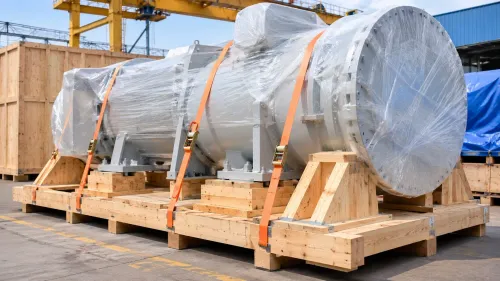
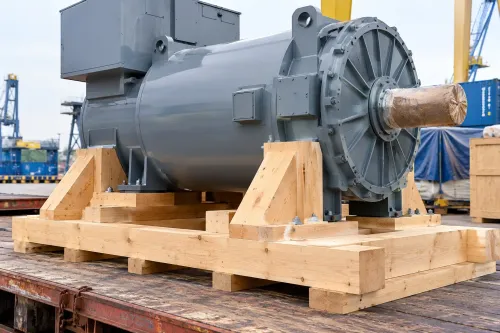
5. Confirm how the weight reaches the ground. A heavy or over-dimensional product needs runners, a skid, pallet or internal supports rather than relying on the PP bottom panel alone.
Custom pp boxes for products are not interchangeable by nominal size. Record the product dimensions, required clearance, insert layout and loading method before comparing pp box sizes; otherwise a larger box can create more movement and increase damage risk. Specify both internal usable dimensions and external transport dimensions on the drawing.
Choose the Construction and Features That Carry the Risk
A 10 kg component and a 500 kg assembly need different load paths, even if their outer dimensions match. Choose twin-wall corrugated PP for low-weight protection, solid PP sheet for puncture resistance, or honeycomb PP when panel stiffness and load distribution matter.
| Construction | Specify | Best fit |
|---|---|---|
| Twin-wall corrugated PP | Sheet thickness and flute direction | Lightweight parts and low handling loads |
| Solid PP sheet | Thickness, edge profiles and corner reinforcement | Sharp, abrasive or puncture-prone products |
| Honeycomb PP | Panel thickness, face sheets and supported edges | Large panels, stiffness and distributed loads |
For heavy products, use a reinforced base, runners or a pallet interface. Transfer concentrated weight through a skid, frame or internal supports; the bottom panel alone can buckle while the walls remain intact. State the sheet thickness, flute direction, edge reinforcement and corner treatment on the drawing.
Choose a hinged lid for frequent access, a lift-off lid for occasional loading, or an overlapping lid for better weather shielding. Add only the fittings your handling cycle needs:
- Reinforced handles and stacking feet
- Ventilation holes and label pockets
- Durable orientation marks and replaceable corner guards
- Foam, fabric, dividers or moulded inserts to immobilise the product
For electronics, specify conductive or static-dissipative PP, the required resistance range, and verification with a surface-resistance meter; ordinary PP is insulating. For outdoor or hot storage, state UV stabilisation, exposure duration and maximum temperature.
Water resistance does not make stitched seams or rivet holes watertight, so reusable PP packaging may still need sealed joints or a liner.
Test the Filled Box Against Its Load and Its Alternatives
A filled-box compression or stacking test is the evidence that an industrial PP box can carry its load in storage. Separate static storage load from moving load: a stack may survive undisturbed but fail when vibration, braking or forklift handling shifts the contents.
Request the test with the filled production configuration, not an empty sample or a nominal kilogram rating. Stacking strength depends on:
- Footprint, wall height, sheet thickness and flute orientation
- Edge and corner design, closure method and load distribution
- Temperature, stacking duration and the planned number of layers
- Pallet dimensions, forklift entry, lifting points and centre of gravity
For domestic, export or courier routes, test the filled package for expected vibration, shock and compression under a suitable ASTM D4169 distribution cycle or ISTA 3-Series protocol. Apply durable ISO 780 orientation symbols, but do not treat them as a safe lifting method.
If the package includes a wooden pallet, skid, cleat or blocking, check ISPM 15 and identify those components on the packing list.
| Option | Strength or limitation | Best fit |
|---|---|---|
| Corrugated box | Lowest one-way cost; moisture-sensitive | Single-use shipments |
| Industrial PP box | Moisture-resistant and lighter than metal | Reusable mixed handling |
| Wooden crate | Handles rigid loads and load-bearing frames | Severe impact, point loads or export |
| Plastic tote | Standardised dimensions and easy return | Repeated parts movements |
| Returnable metal container | Carries concentrated weight; heavy | Dense, heavy industrial loads |
Calculate Whether Reuse Pays for Your Supply Chain
Reusable PP packaging costs less than a one-way custom box only when its total cost per successful trip is lower, not when its purchase price looks lower. Divide all costs by completed, collected trips; an eight-trip plan that returns only four boxes doubles the purchase allocation.
Build the calculation from your actual supply chain:
- Purchase price and number of successful cycles
- Cleaning, inspection and administration
- Repair allowance and replacement parts
- Storage space for empty boxes
- Empty-return freight and collection rate
- Loss and damage before the next shipment
A ₹2,400 box used for eight successful trips has a ₹300 base cost per trip. Add ₹35 cleaning, ₹40 return freight, ₹25 repair allowance and ₹20 loss allowance: ₹420 per trip before storage and administration. Compare that figure with the one-way custom-box cost.
If only four of eight planned trips succeed, the purchase component becomes ₹600 per successful trip, before those operating costs.
| Option | Cost effect | Suitable when |
|---|---|---|
| One-way custom box | Pay once per shipment; no return system | Destinations do not return packaging or loss rates are high |
| Reusable PP packaging | Lower cost after enough controlled cycles | Routes repeat and cleaning and tracking are practical |
| Collapsible box | Lower empty-return volume; higher hardware and maintenance cost | Return freight is expensive and fold points can be maintained |
Set break-even using your measured collection rate, not an assumed lifespan. Use reusable PP packaging when shipment volume supports asset tracking and the box survives the required cleaning and handling cycles.
Use a Production-Intent Sample Before You Place the Order
Before approving custom PP boxes in Pune, give the supplier enough information to reproduce the real handling conditions, then test a production-intent sample.
1. Send product drawings, maximum loaded weight, centre-of-gravity location, required stack height, transport route, vehicle and pallet dimensions, loading equipment, monthly quantity and expected number of return trips.
2. State whether the box will face monsoon handling, wash-down, outdoor storage, export shipment, courier handling or ESD-sensitive products. For electronics, specify the ESD limit, conductive or static-dissipative materials, compatible inserts and verification method; ordinary PP is insulating.
3. Request a sample made with the quoted sheet type and thickness, flute direction, stitching or welding, fittings, inserts and artwork. A heavier sheet or different flute direction can hide failures in the production design.
4. Measure usable internal length × width × height and external dimensions. Test the filled-product fit, cushioning clearance, lid closure, labels and pallet interface. Lift the loaded box using the intended method, then stack filled boxes to the planned height for the planned duration and temperature.
5. Ask for compression or stacking test records, the filled configuration, test duration and acceptance limits—not only a nominal kilogram rating. Stacking strength changes with footprint, wall height, edges, closure and load distribution.
For custom PP boxes for products, OM INDIA can support this review by checking the drawings, load path, pallet interface and trial sample against the route and monthly volume. Approve only when the sample matches the quoted production construction.
Related products
 | PP Boxes Manufacturer & Supplier in Pune, Pimpri Chinchwad & Mumbai OM INDIA is a trusted manufacturer and supplier of Customized PP Boxes, designed to meet... View product → |
 | PP Boxes Manufacturer & Supplier in Pune, Pimpri Chinchwad & Mumbai OM INDIA is a trusted manufacturer and supplier of PP Boxes, designed for durable,... View product → |
Frequently asked questions
How do I choose the correct PP box size?
Measure the product’s greatest length, width and height with connectors, brackets, handles and other protrusions fitted. Specify usable internal dimensions, then allow clearance for cushioning, partitions and loading access.
Which construction features should an industrial PP box have?
Match the construction to the risk: use reinforced walls and bases for stacking, partitions for part-to-part contact, secure closures for handling, and protective interiors for fragile or finished surfaces.
What should I test before ordering custom PP boxes?
Test a filled sample made with production-intent materials and construction. Check fit, loading time, lid closure, stacking, handling, vibration exposure and product condition after transport.
When does reusable PP packaging pay for itself?
Compare the expected reuse cycles with the purchase cost, cleaning, inspection, repair, return freight, storage and loss rates. Reuse pays when avoided single-trip packaging costs exceed those operating costs.
Related products
 | PP Boxes Manufacturer & Supplier in Pune, Pimpri Chinchwad & Mumbai OM INDIA is a trusted manufacturer and supplier of Returnable PP Boxes, designed for... View product → |
 | PP Boxes Manufacturer & Supplier in Pune, Pimpri Chinchwad & Mumbai OM INDIA is a trusted manufacturer and supplier of Recyclable PP Boxes, designed for... View product → |
Keywords