A custom package starts with product data and route constraints, not with a request for a crate price. By the end of the process, the manufacturer should have an approved drawing, a tested restraint plan, suitable materials, clear handling marks and a delivery schedule that fits production and transport requirements.
Key takeaways
- Provide dimensions, weight, centre of gravity and lifting points.
- Match cushioning, blocking and moisture barriers to the route.
- Test fit, handling access and restraint before full production.
- Approve drawings and packing instructions before manufacturing begins.
What information does a Pune manufacturer provide before requesting a quote?
A packaging brief replaces a vague crate quotation with the product, handling and journey data needed for an accurate proposal. The custom packaging process in Pune usually starts with procurement, production, logistics, engineering or export teams submitting this information.
1. Record the product’s length, width and height, gross weight, centre of gravity, lifting points, fragile or exposed surfaces, connectors, projections, permitted orientation and stacking limits.
2. Describe protection risks: moisture, corrosion, dust, impact and the expected storage duration. State whether the shipment is domestic or export-bound.
3. Specify the journey: transport mode, destination, loading equipment and unloading equipment. Road shipments need vehicle-deck dimensions, axle or weight limits, bridge-clearance and turning constraints; export shipments need container fit, port handling and re-handling details.
4. Add site constraints, including vehicle access, container dimensions, warehouse door height, aisle width, crane capacity, forklift capacity and available loading space. For over-dimensional cargo, provide sling, spreader and fork-entry requirements, plus any rule against lifting the crate itself.
5. Attach product drawings, photographs and handling instructions, then identify the person who can answer technical questions. Missing projections or an incorrect centre of gravity can force redesign after approval.
Incomplete data changes the internal dimensions, materials, restraints and labour in the proposal. The result is changed pricing, a replacement drawing and schedule delays when production or dispatch has already been planned.
How does packaging design turn product data into a usable package?
The brief becomes a packaging specification by translating product geometry and handling risks into controlled spaces, supports and restraints. Packaging design for manufacturers is not a box drawn around the product; it defines how the load will be supported, accessed and moved.
1. Convert the drawing into internal length, width and height, then add deliberate clearance for projections, cushioning and removal. Check protruding connectors, service access, inspection points, tools and the removal sequence before fixing dimensions.
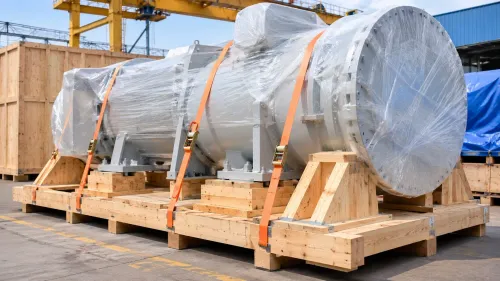
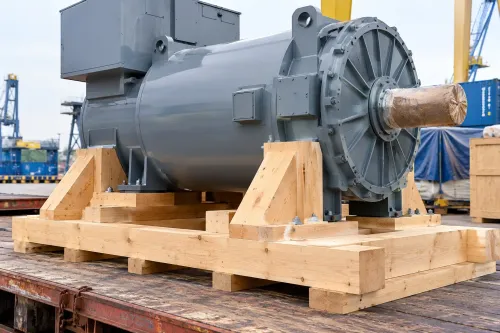
2. Assign cushioning zones around fragile surfaces and define blocking, bracing, bolting or chocking points. Heavy equipment must resist longitudinal, transverse and vertical transport loads through specified restraints; loose void fill or foam alone cannot hold it in place.
3. Draw the support structure around skids or runners, covers, access panels and fasteners. Show lifting provisions, sling paths, fork-entry openings, centre-of-gravity and orientation markings. The drawing must also state where operators can attach equipment without contacting the product.
4. Review the specification against a first-article or prototype pack. A trial exposes tight fit-up tolerances, blocked tool access, closure problems, restraint movement and difficult unloading before production begins.
For custom industrial packaging for process in Pune, the usable drawing is therefore a handling document as much as a manufacturing document. Measure the packed route, not only the product: a connector, inspection cover or removal tool omitted at this stage can force redesign, delay dispatch and damage the equipment during unpacking.
How are materials and protection methods matched to the shipment route?
| Material | Strength and weakness | Best route/use |
|---|---|---|
| PP | Light, moisture-resistant and reusable, but it lacks the rigidity and load capacity for many heavy machines. | Repeated internal handling, clean indoor storage and lighter components. |
| Corrugated board | Low weight and easy to recycle, but moisture weakens it and high loads can crush walls or corners. | Air freight, dry warehouses and protected secondary packaging. |
| Wood | Strong, repairable and suitable for skids, blocking and bracing, but adds weight and disposal effort. | Domestic road transport, heavy equipment and export crates. |
| Hybrid package | Combines a rigid frame with board, PP or barrier materials, but reusable frames add return-logistics and storage costs. | Repeated movements where protection and lower recurring material use justify the handling system. |
Route changes the specification. Domestic road shipments must fit the vehicle deck, axle limits, bridge clearances, turning radius and available loading equipment. Export sea freight adds container fit, port handling, multiple re-handling events and export paperwork.
Air freight rewards low mass and tight dimensions; warehouse storage demands stackability and moisture control; repeated internal handling favours durable, repairable or reusable construction. A custom packaging solutions in Pune provider should price these landed costs, not material cost alone.
Use barrier film, VCI material, desiccant and humidity indicators when condensation or corrosion threatens. They control the atmosphere; they do not absorb impact, prevent abrasion or restrain a machine against longitudinal, transverse and vertical loads. Check the sealed bag for punctures and size desiccant from free air volume, storage duration and film performance—not product weight.
For export, solid-wood packaging needs ISPM 15 treatment and the IPPC mark; kiln-dried timber alone is not proof. Confirm container dimensions, port restrictions and documents before an industrial packaging service in Pune releases the package.
How is the proposed package checked before full production?
A first-article pack is ready for full production only when the product, package and handling plan work together—not merely when the drawing looks correct. This is the practical checkpoint in packaging design for manufacturers and the custom packaging process in Pune.
1. Review the approved drawing against the actual product. Confirm internal fit, product clearance, fit-up tolerances, load rating, stackability, forklift-entry openings, crane and sling access, centre-of-gravity marking, and orientation markings. Check door widths, vehicle deck limits, container dimensions and compatibility with the customer’s forklifts, cranes and lifting equipment.
2. Complete a trial pack with the production product or a verified mock-up. The exercise exposes tool-access problems, closure interference, restraint movement, loose bolts or chocks, film punctures and a removal sequence that damages the product. Operators must be able to close, secure and open the package without unsafe improvisation.
3. Test the packed load against the real distribution hazard. The plan can cover shock, vibration, compression and atmospheric conditioning through an applicable ASTM D4169 distribution cycle or another agreed protocol. Select the cycle and assurance level for the route, handling pattern and shipment configuration.
4. Do not assume ISTA 3E fits every heavy machine; it targets packaged products moved as unitized loads. Use it when the shipment is a unitized load, not automatically for one machine in an individual export crate.
5. Record corrections, inspection results and approval signatures before releasing cutting lists and production quantities. A failed trial pack is cheaper to redesign than to reproduce.
What happens after design approval, and how does the packaging reach dispatch?
An approved drawing releases procurement, not immediate crating. The packaging team orders specified timber, PP, corrugated material, barrier film, VCI, desiccant, fasteners, bolts and lifting hardware, then reserves production capacity against the customer’s ready date. Missing hardware at this point can stop a completed package from dispatching.
- Procurement confirms material grades, quantities, treatment marks and hardware.
- Production schedules skids, blocking, bracing, covers and closures around product availability.
- The team trial-packs the equipment and records fit, restraint movement, film punctures and tool access.
- Inspection verifies blocking, bracing, cushioning, barrier-bag sealing, VCI placement, desiccant quantity and humidity indicators.
- Final packing adds the lid or cover, fasteners, labels and handling marks before release.
The inspection compares the packed package with gross packed weight, lifting points, centre-of-gravity marking, fork-entry restrictions, orientation arrows, destination and vehicle or container limits.
A crate that fits the product can still fail dispatch if a forklift cannot enter, a sling cannot reach the lifting points, or its dimensions exceed the vehicle deck or container door.
Dispatch records normally include the packing list, package dimensions and weights, photographs, handling instructions and export wood-treatment evidence when required. For containerised cargo, the loading plan and verified gross mass declaration must also align with the shipment.
A Pune manufacturer may involve an industrial packaging service in Pune early when the load is over-dimensional, export wood compliance applies, a barrier bag controls corrosion, or loading requires a crane, spreader or specific sequence. OM INDIA’s value in that role is coordinating design, manufacture and delivery.
That coordination is the practical difference between custom packaging solutions in Pune and custom industrial packaging for process in Pune treated as a last-minute box order.
Related products
 | PP Boxes Manufacturer & Supplier in Pune, Pimpri Chinchwad & Mumbai OM INDIA is a trusted manufacturer and supplier of Customized PP Boxes, designed to meet... View product → |
 | Corrugated Boxes Manufacturer & Supplier in Pune, Pimpri Chinchwad & Mumbai OM INDIA is a trusted manufacturer and supplier of Customized Corrugated Boxes, designed... View product → |
Frequently asked questions
What information does a Pune manufacturer provide before requesting a packaging quote?
Provide the product’s dimensions, weight, centre of gravity, lifting points, fragility, surface-finish requirements, stacking limits, handling equipment, storage period and shipment route. Include photos, drawings and the destination when available.
How does packaging design turn product data into a usable package?
The designer converts the product envelope into an internal layout with supports, blocking, cushioning, restraint points, access panels and lifting features. The design must protect the product while allowing safe loading, unloading, inspection and reuse where required.
How are materials and protection methods matched to the shipment route?
Choose materials and barriers according to handling, vibration, stacking, transit duration, humidity and destination. Domestic road freight, export sea freight and over-dimensional cargo can require different combinations of timber, cushioning, corrosion protection, moisture barriers and restraints.
How is the proposed package checked before full production?
Check the drawing against the product, confirm clearances and centre of gravity, review forklift and crane access, inspect restraint points, and perform a trial fit or prototype review. Resolve loading and unloading problems before approving production.
What happens after design approval, and how does the packaging reach dispatch?
The approved drawing becomes a production instruction covering materials, dimensions, hardware, assembly and packing steps. The pack is manufactured, inspected, assembled around the product, labelled, documented and coordinated with dispatch timing and carrier requirements.
Related products
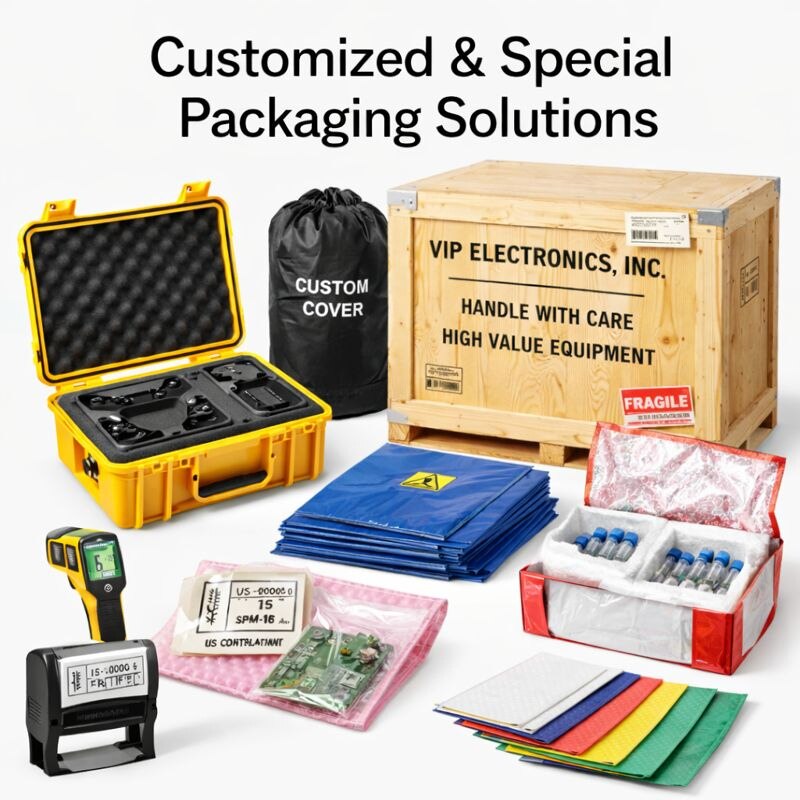 | Customized & Special Packaging Solutions Customized & Special Packaging Solutions Manufacturer & Supplier in Pune, Pimpri Chinchwad & Mumbai OM INDIA is a trusted manufacturer and supplier of Customized & Special Packaging... View product → |
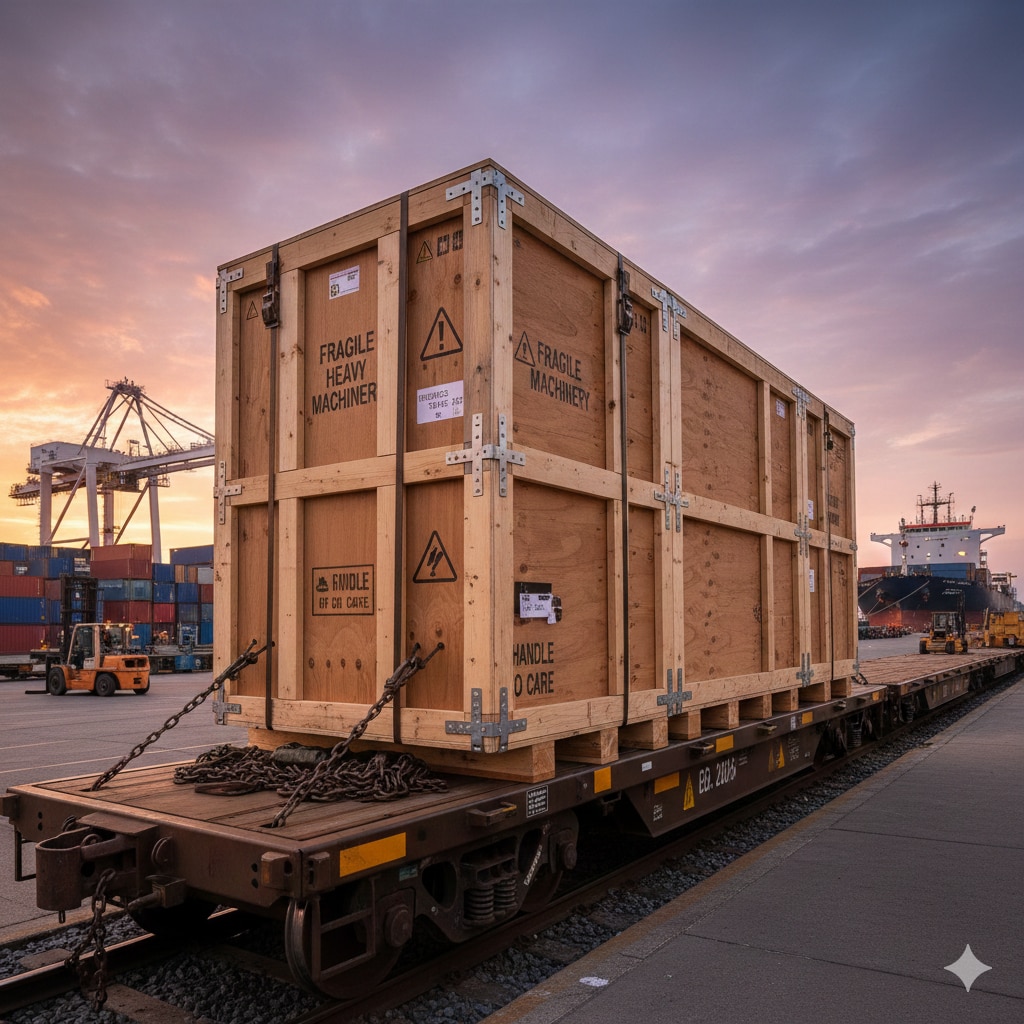 | Customized & Special Packaging Solutions Manufacturer & Supplier in Pune, Pimpri Chinchwad & Mumbai OM INDIA is a trusted manufacturer and supplier of Heavy Equipment Packaging, designed to... View product → |
 | PP Boxes Manufacturer & Supplier in Pune, Pimpri Chinchwad & Mumbai OM INDIA is a trusted manufacturer and supplier of PP Boxes, designed for durable,... View product → |
 | Wooden Packaging Boxes Manufacturer & Supplier in Pune, Pimpri Chinchwad & Mumbai OM INDIA is a leading manufacturer and supplier of Customized Wooden Boxes designed to... View product → |
Keywords